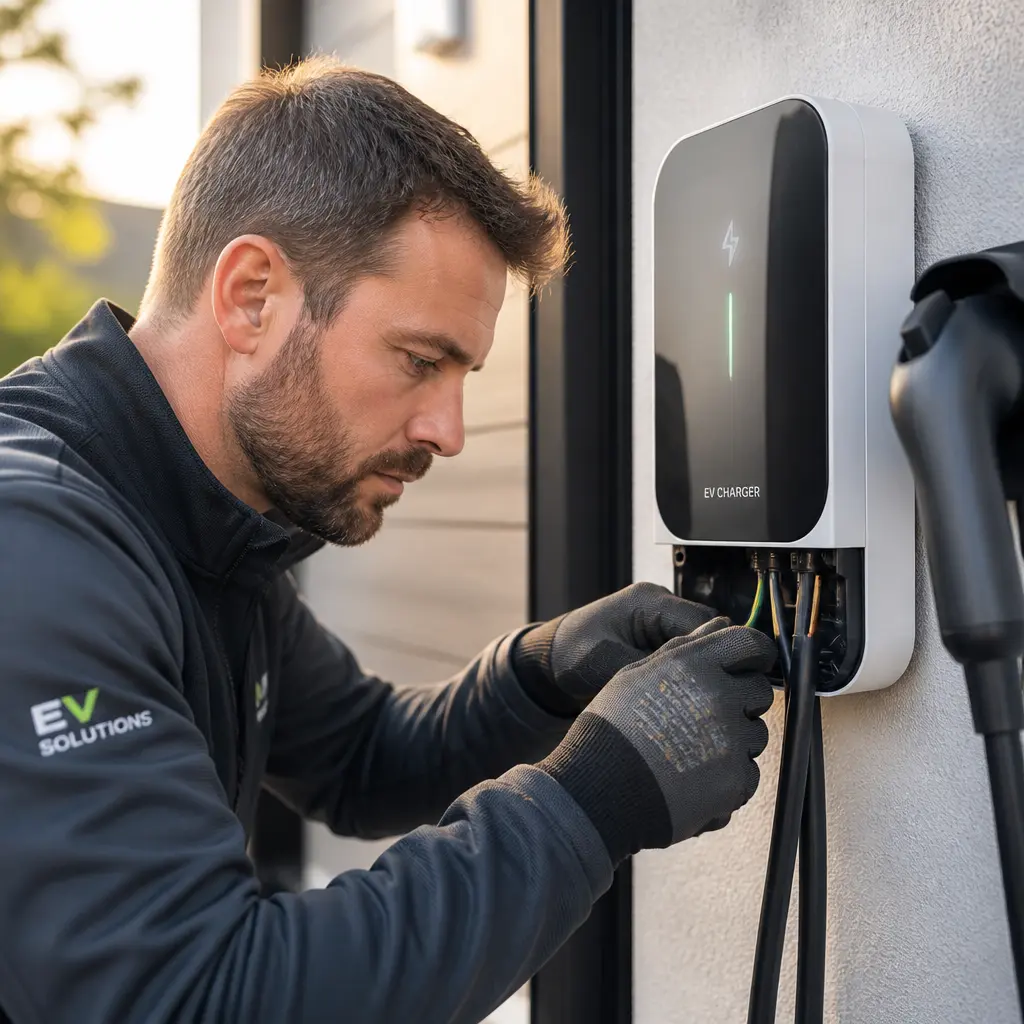
Installing an electric vehicle charger at home can make charging simpler, quicker and more convenient. However, the property, parking space and electrical supply must all be suitable.
A professional installer can assess your home, recommend the correct charging power and complete the work safely. You may also need permission from a landlord, freeholder or local authority before installation begins.
Can You Install an EV Charger at Home?
Yes, an EV charger can be installed at many homes. The simplest installations are usually at properties with a private driveway or another clearly defined off-street parking space.
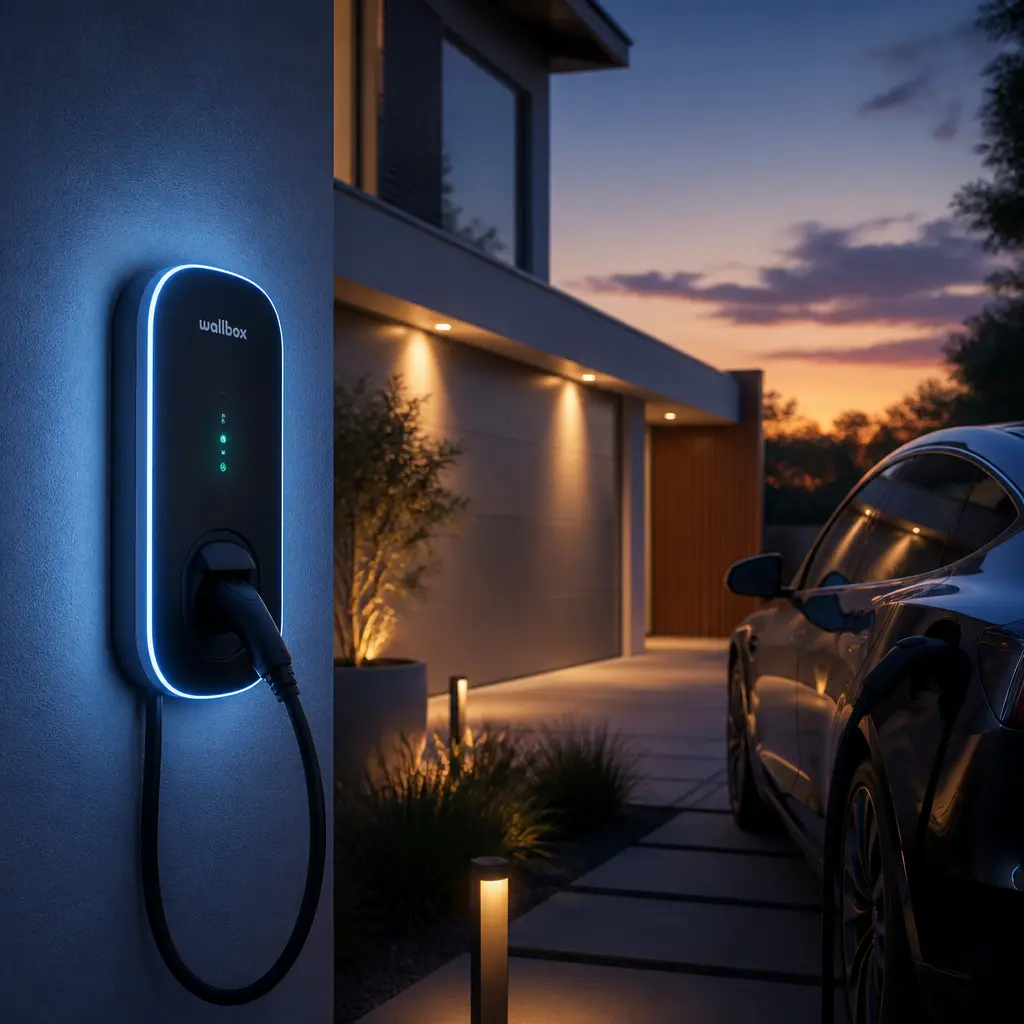
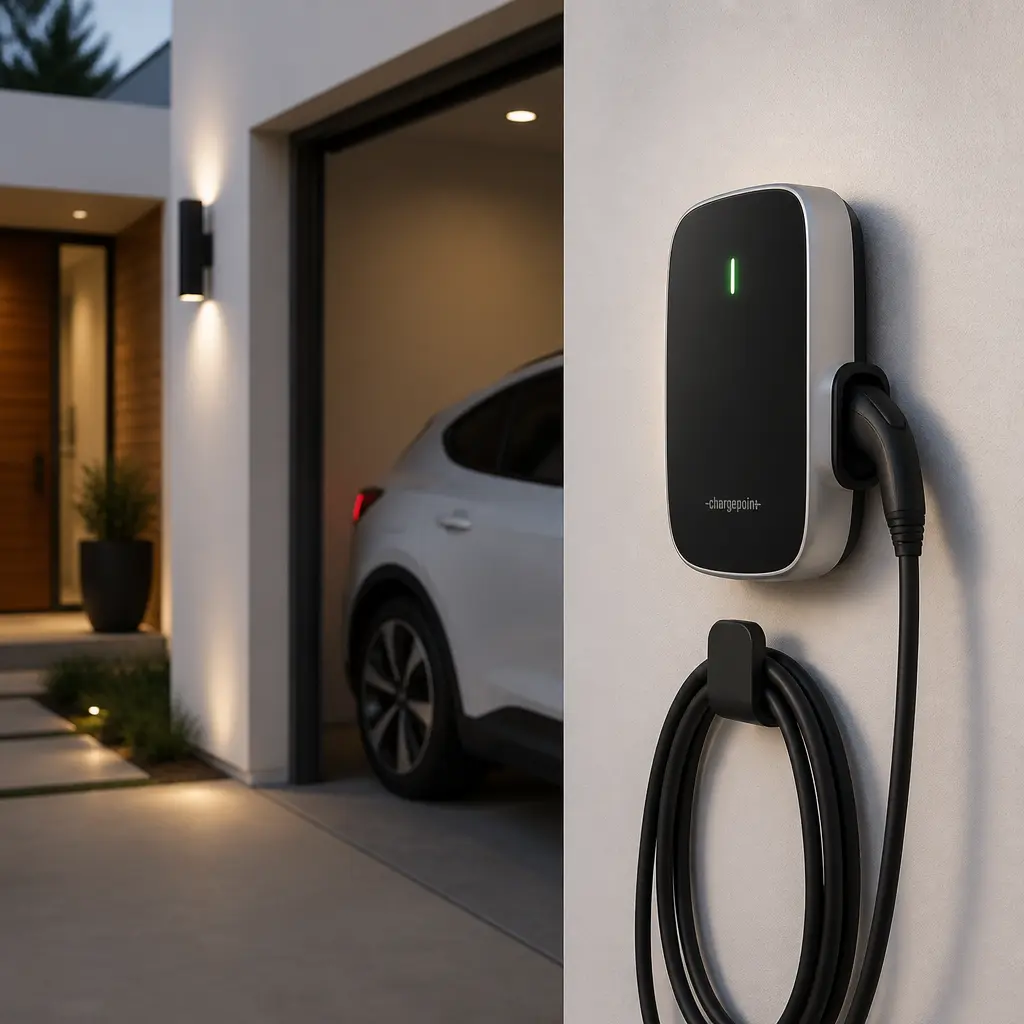
The charger is normally fixed to an outside wall or fitted to a separate post near the parking space. A cable connects the charger to the vehicle when it is parked.
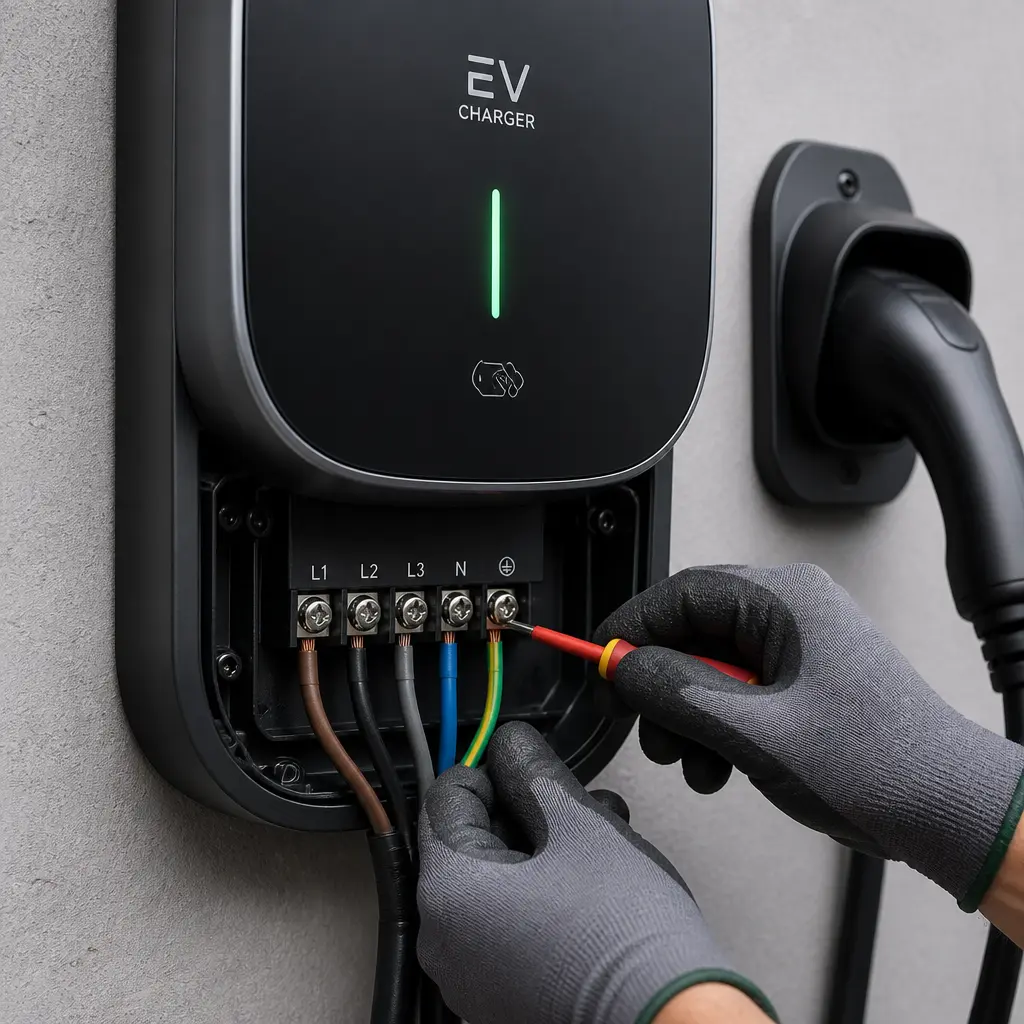
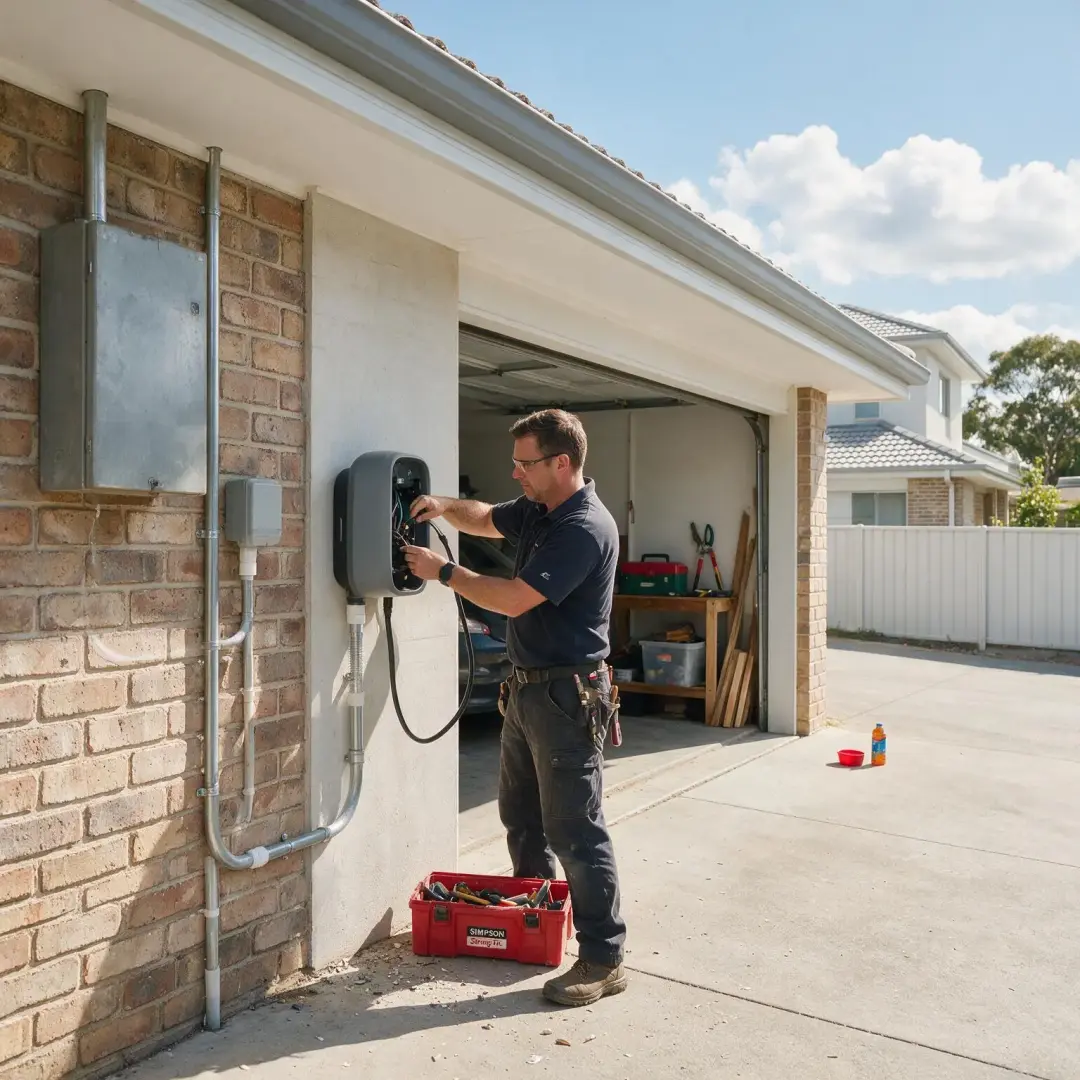
Before the charger is installed, an electrician must check that the electrical supply can support the extra demand. The installer should also examine the consumer unit, earthing arrangements, cable route and distance between the charger and parking space.
How Common Is EV Charging in the United Kingdom?
Electric vehicle charging infrastructure continues to grow across the United Kingdom. As of 1 April 2026, there were 119,080 public EV chargers, including 27,372 chargers rated at 50 kilowatts or more.
Government support has also helped more households install private charging equipment. By 1 April 2026, the chargepoint grant for renters and flat owners had funded 24,759 charging sockets. This included 10,648 sockets installed during the previous 12 months.
These figures cover public and grant-funded equipment. They do not represent every privately funded home charger in the country.
- 119,080 public EV chargers were available on 1 April 2026
- 27,372 public chargers provided 50 kilowatts or more
- 24,759 sockets had been supported through the renters and flat owners grant
- 10,648 of those grant-supported sockets were installed during the previous 12 months
- Eligible home charging grants increased to a maximum of £500 per socket on 1 April 2026
The growth of public charging gives drivers more options away from home. However, drivers with suitable private parking may find that a home charger is the most convenient way to replace the energy used during normal daily journeys.
What Do You Need for a Home EV Charger?
A suitable installation normally requires a safe parking space, an appropriate electrical supply and a practical cable route between the consumer unit and charger.
The parking space should be private, clearly defined and accessible to the person using the charger. The cable should reach the vehicle without crossing a public pavement or creating a trip risk.
The charger will usually need its own electrical circuit and safety protection. Modern units may include protection within the charger, but the installer must confirm that the complete system meets current electrical requirements.
Internet or mobile network access may also be useful because many smart chargers use an application to control charging times and review electricity use.
Do You Need a Driveway?
A driveway is not always essential, but you normally need a safe and lawful place to park while the vehicle is connected.
A garage, private car park or allocated off-street space may be suitable. The parking space does not always need to form part of the home, but you must own it or have a legal right to use it.
Installing a charger is more difficult when the vehicle is parked on a public road. A loose cable should not be placed across a pavement because it could cause an accident or block access.
Some local authorities allow approved channels or cable covers to be installed across pavements. The design, application process and local rules differ between council areas, so permission must be obtained before work begins.
Can You Install a Charger Without Off-Street Parking?
It may be possible, but you will normally need approval from the local authority and a safe way to take the cable across or beneath the pavement.
The solution must not create a trip risk, prevent wheelchair access or damage other equipment beneath the pavement. The location of streetlights, utility covers, drains and neighbouring electrical systems may also affect whether the work is suitable.
The government offers a grant for some households with on-street parking. The installation must meet the scheme rules, and the cross-pavement solution must be approved by the relevant local authority.
Can Renters and Flat Owners Install an EV Charger?
Renters and flat owners may be able to install a charger when they have their own private off-street parking space.
Written permission will normally be needed from the landlord, freeholder or property manager. In a shared building, the cable route may pass through communal land or connect to shared electrical equipment, so the installation may require further agreements.
Eligible renters and flat owners can apply for a government grant covering 75% of the purchase and installation cost, up to a maximum of £500 per socket. The increased rate applies from 1 April 2026, and the scheme is available until 31 March 2027 unless it is changed or withdrawn earlier.
You must receive confirmation that you are eligible before the charger is installed.
What Permission Will You Need?
The permission needed will depend on who owns the home, the wall, the parking space and any land crossed by the cable.
A renter should obtain written approval from the landlord. A flat owner may need approval from the freeholder or building management company. A lease may also include rules about changes to outside walls or shared electrical systems.
Keep copies of all permissions. Grant applications may require written evidence showing that the relevant people or organisations have approved the installation.
What Electrical Checks Are Required?
A home EV charger places a large and continuous demand on the electrical supply. The installer must make sure the property can provide this power safely.
The assessment should include the main supply fuse, consumer unit, earthing arrangements and existing household demand. The electrician may also check equipment such as electric heating, an electric shower, solar panels and battery storage.
Some properties need improvements before the charger can be connected. This could include replacing an older consumer unit, improving earthing or upgrading part of the electrical supply.
A smart load management system may be recommended when the available capacity is limited. This system lowers the charging rate when other high-powered equipment is being used, helping to prevent the electrical supply from becoming overloaded.
Does the Electricity Network Operator Need to Be Told?
Yes. An EV charger must be registered with the company responsible for the local electricity network.
The installer will assess the planned installation and decide whether it can be connected before the network operator is notified or whether approval is needed in advance.
A straightforward installation may follow a connect-and-notify process. A property with limited capacity, several chargers or other high-powered electrical equipment may require an application before work begins.
The installer will normally manage this process and should keep evidence that the correct notification was made. The customer should receive the relevant electrical certificate and charger documents when the installation is complete.
What Size Home EV Charger Can You Install?
Most homes in the United Kingdom have a single-phase electrical supply. A charger rated at around 7 kilowatts is therefore a common choice.
A 7-kilowatt unit can usually add about 25 to 30 miles of range for each hour of charging. The exact amount depends on the vehicle, battery efficiency, temperature and driving conditions.
Some properties can support an 11 or 22-kilowatt charger, but these higher rates normally require a three-phase supply. The vehicle must also be able to accept the additional power.
Installing a 22-kilowatt charger will provide little benefit when the vehicle can only receive 7 or 11 kilowatts through its alternating current connection. The installer should check both the home supply and the vehicle specification before recommending a unit.
Is a 7-Kilowatt Charger Fast Enough?
A 7-kilowatt charger is suitable for many households. It can replace the energy used during a normal day while the vehicle is parked overnight.
For example, adding 42 kilowatt-hours of energy would take about six hours under ideal conditions. Charging may take slightly longer because some energy is lost and the vehicle may change the rate during the session.
Most drivers do not need to charge an empty battery from 0% to 100% every night. Regular shorter charging sessions are often enough for normal daily travel.
Do You Need Planning Permission for a Home EV Charger?
Planning permission is not normally required for many home charger installations in England when the property has lawful off-street parking and the equipment meets permitted development conditions.
A wall-mounted charger and its casing must not normally exceed 0.2 cubic metres. A charger fitted to a post within the grounds of a home or block of flats must not normally exceed 1.6 metres in height.
Different rules can apply to listed buildings, scheduled monuments, conservation areas and locations where permitted development rights have been restricted. Planning rules also differ across England, Scotland, Wales and Northern Ireland.
Check with the local planning authority when the property has protected status or when there is any doubt about the proposed location.
Can You Charge an EV from a Household Socket?
Some electric vehicles include a cable that can connect to a household socket. This normally provides around 2 to 3 kilowatts and is much slower than a dedicated home charger.
A large battery may take more than 20 hours to charge through a household socket. The socket and electrical circuit will also carry a high load for a long period.
A household socket should only be used when the vehicle manufacturer allows it and an electrician has confirmed that the socket, circuit and earthing are suitable.
Do not use an extension lead, travel adaptor or coiled cable to charge an electric vehicle. These products may become hot and create a serious safety risk.
What Is a Smart EV Charger?
A smart EV charger can communicate with an application, charging service or energy provider. It can delay or adjust charging instead of drawing full power as soon as the vehicle is connected.
This makes it possible to schedule charging for periods when electricity prices are lower. It can also reduce pressure on the electricity network during busy periods.
Home and workplace chargers sold for private use in Great Britain must meet government smart charging requirements. These include set charging periods, security features and the ability to measure electricity use.
Drivers remain in control and can override a delayed session when the vehicle needs to be charged immediately. Check that the charger application is easy to use and that its main controls remain available if the internet connection fails.
Can a Home Charger Work with Solar Panels?
Some smart chargers can use spare electricity produced by home solar panels. This may reduce the amount of electricity taken from the grid.
The available charging power will change with daylight, weather and household electricity use. A charger may switch between solar and grid electricity or combine both sources to maintain a useful charging rate.
Ask the installer whether the charger is compatible with the existing solar system, inverter and home battery. Additional monitoring equipment may be needed to measure the direction and amount of electricity flowing through the property.
Solar charging can lower running costs, but it may not provide enough energy for the vehicle on dark winter days. Overnight grid charging may still be required.
Where Should a Home EV Charger Be Installed?
The charger should be close enough to the parking space for the cable to reach the vehicle without being stretched. It should also be positioned where the cable will not cross a doorway, path or area used by pedestrians.
Consider which side of the vehicle contains the charging connection. The location should work when the vehicle is parked normally and should allow space for a different vehicle in the future.
The installer should avoid areas that regularly flood or collect standing water. The charger must be suitable for outdoor use and fixed securely to a sound wall or post.
The cable route from the consumer unit can affect the cost. A long route, solid floors, finished rooms or detached garages may require more work than a charger installed close to the electrical supply.
Should You Choose a Tethered or Untethered Charger?
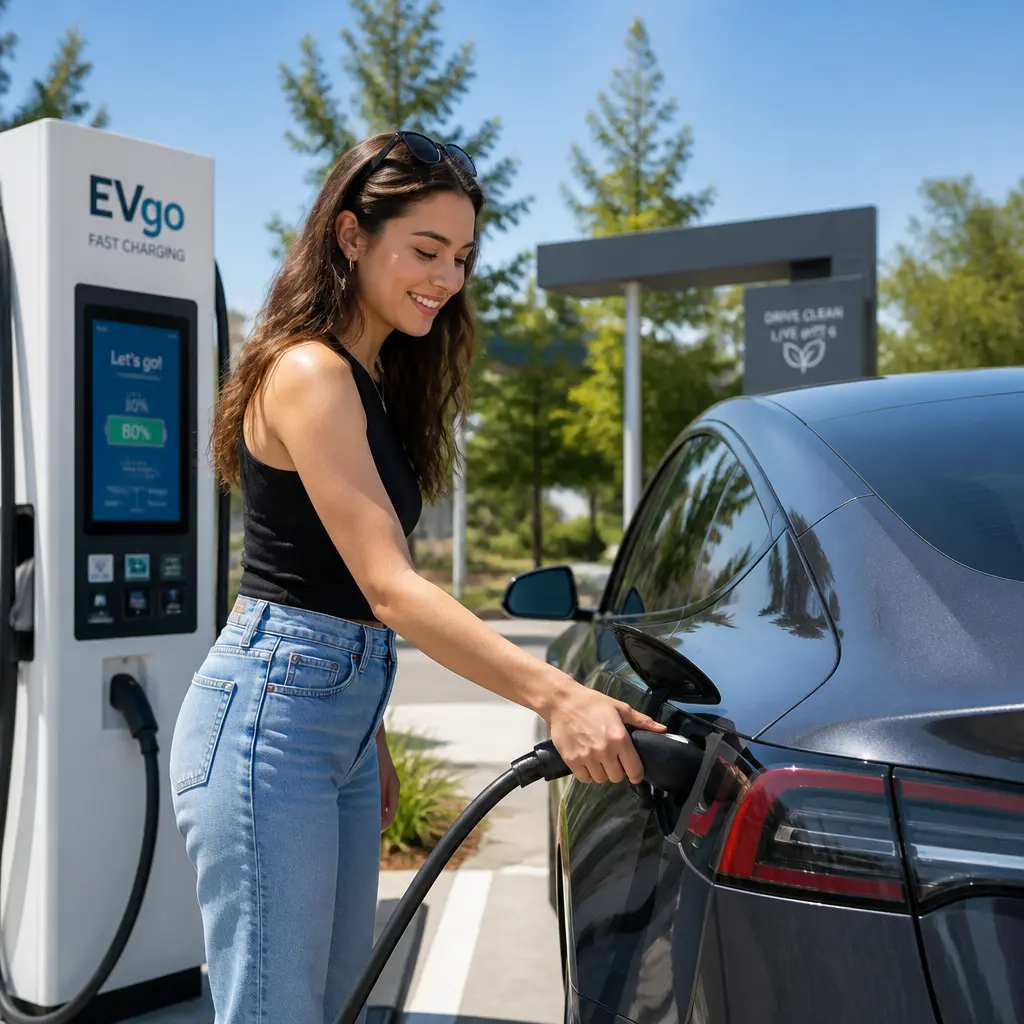
A tethered charger has a cable permanently attached. It is convenient because the driver only needs to remove the cable from its holder and connect it to the vehicle.
An untethered charger has a socket. A separate cable is connected between the charger and vehicle for each session.
A tethered unit may be simpler for daily use, while an untethered unit can look tidier when no vehicle is connected. A separate cable can also be replaced more easily if it becomes damaged.
Check the connection used by the current vehicle, the required cable length and whether the charger is likely to be used with another vehicle in the future.
How Long Does Home EV Charger Installation Take?
A straightforward installation may be completed during one visit. This is more likely when the consumer unit is modern, the charger is close to the electrical supply and there is a clear cable route.
The project may take longer when electrical improvements, groundwork or permission from another organisation is required. Network approval can also affect the schedule when the charger cannot follow the standard connect-and-notify process.
A remote survey may be used before the installation. The installer may ask for photographs of the consumer unit, electricity meter, main fuse, proposed charger position and complete cable route.
An on-site survey may be recommended when the property or installation is more complex.
Work that may affect the installation includes:
- Replacing or improving an older consumer unit
- Upgrading the main electrical supply
- Installing a long or difficult cable route
- Digging a channel across a garden or driveway
- Fitting a separate charger post
- Obtaining permission from a landlord, freeholder or local authority
- Waiting for approval from the electricity network operator
How Much Does a Home EV Charger Cost?
The total price depends on the charger model and the amount of installation work required. A basic installation will normally cost less than work involving a long cable route, electrical upgrades or groundwork.
Ask for a written quotation that clearly explains what is included. It should cover the charger, cable, electrical protection, labour, testing, certification and any network application.
Check whether the price includes additional work such as drilling through several walls, lifting paving, installing a post or repairing surfaces after the cable has been fitted.
Eligible renters, flat owners, residential landlords and households with approved on-street parking solutions may receive a government grant of 75% of eligible costs, up to £500 per socket.
How Do You Choose a Home EV Charger?
Begin by checking the maximum charging rate supported by the vehicle. There is little benefit in paying for a higher charging rate that the vehicle cannot use.
Consider whether you want a tethered cable or an untethered socket. Check the cable length, weather protection, warranty, application controls and access security.
Some chargers can work with solar panels, home batteries or electricity prices that change during the day. Others can share the available power between two vehicles.
The appearance and size of the charger may also matter when it will be installed at the front of the property. Choose equipment from an established manufacturer with clear support, updates and warranty arrangements.
Why Should You Use a Qualified Installer?
An EV charger is not a standard household appliance. It draws a large amount of electricity for several hours and must be connected to suitable safety equipment.
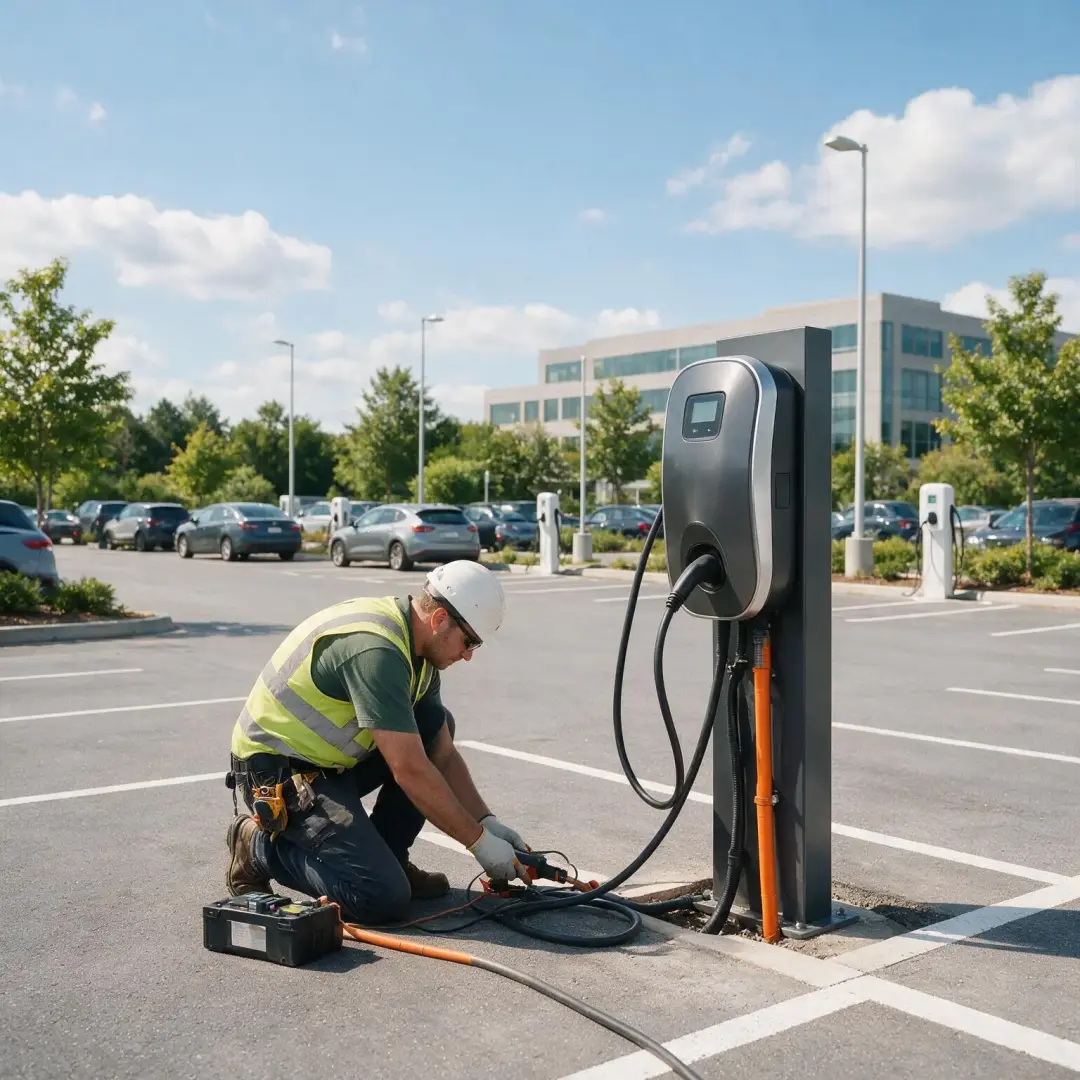
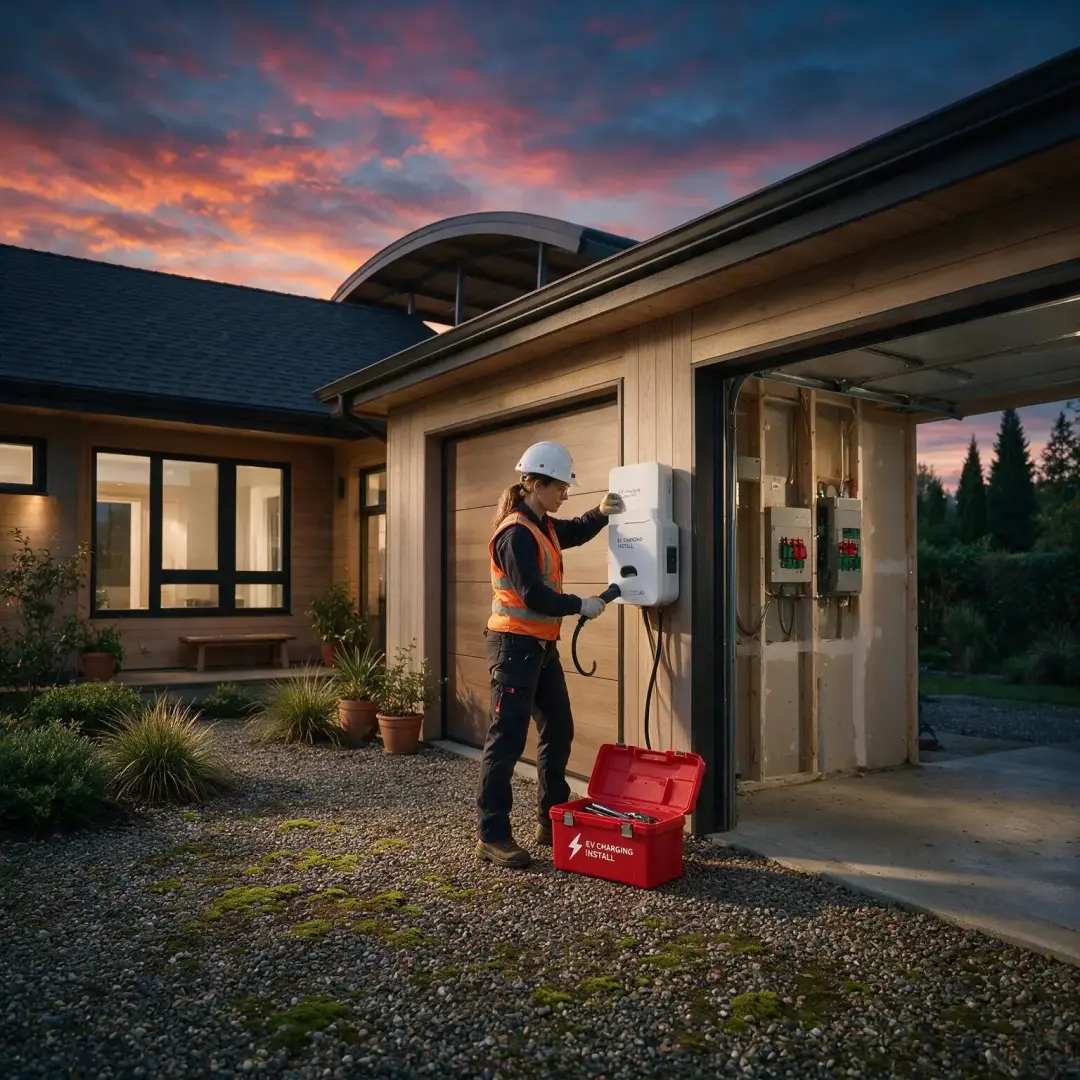
A competent installer will assess the supply, select the correct cable and protection, test the completed system and provide an electrical installation certificate.
The installer should also notify the electricity network operator and explain how to use the charger safely. An installer authorised by the Office for Zero Emission Vehicles will be required when claiming a government chargepoint grant.
Poor installation could cause overheating, electric shock, damage to the vehicle or problems with the household electrical supply. Do not attempt to install or alter a charger without the correct skills and qualifications.
What Should You Check After Installation?
The installer should test the charger and show that it connects correctly to the vehicle. You should receive an electrical installation certificate, product instructions, warranty details and information about network notification.
Check that the cable can be stored without resting on the ground or blocking a walkway. Learn how to stop a charging session and how to isolate the charger in an emergency.
Set up the charger application and review its charging schedule. Make sure the vehicle will receive enough energy before it is next needed.
Keep the charger clean and inspect the cable and connection regularly. Arrange professional inspection when equipment becomes damaged, unusually hot or unreliable.
Frequently Asked Questions
```Can Any House Have an EV Charger?
No. The property must have a suitable electrical supply, safe parking arrangement and practical cable route. Some homes require electrical improvements or permission before a charger can be installed.
Can I Install an EV Charger Myself?
A home charger should be installed by a competent electrician with suitable training and experience. A professional installation is also required when applying for a government grant.
Can You Install a Charger in a Garage?
Yes, provided the garage has a suitable electrical supply, safe cable route and enough space to connect the vehicle. The charger may be installed inside or outside, depending on how the garage and parking space are used.
Does a Home Charger Increase Property Value?
A charger may make a property more attractive to buyers or tenants who own an electric vehicle. However, any effect on value will depend on local demand, parking arrangements and the quality of the installation.
Can Two Electric Vehicles Share One Charger?
Yes. The vehicles can be connected at different times. Some households install two charging sockets with a load management system that safely shares the available electrical power.
Will a Home Charger Work During a Power Cut?
No. A normal home EV charger will stop working when the property loses its grid electricity supply. It may restart automatically when power returns, depending on the charger settings.
Can You Install an EV Charger at Home?
A home EV charger can be installed at many properties with suitable parking, enough electrical capacity and a safe cable route.
A 7-kilowatt smart charger is a practical choice for many households because it can restore a useful amount of range while the vehicle is parked overnight.
Renters, flat owners and drivers without traditional driveways may also have options, but they are more likely to need written permission and additional planning.
Arrange an assessment before buying equipment. A qualified installer can check the property, vehicle and electrical supply before recommending a suitable charger and completing the necessary safety checks, certification and network notification.
Do you need electric car charger fitters near me in Wigan, Manchester, Liverpool or Bolton? Wigan Electrical Solutions can assess your parking space, electrical supply and charging needs before recommending a suitable system. Contact the team to arrange a professional home EV charger assessment and installation.