Electrical emergencies can happen without warning. A damaged socket, faulty appliance, overloaded extension lead or exposed cable can cause electric shock, burns, fire or serious property damage.
Knowing how to respond can help protect everyone in the home. However, you should never take personal risks or attempt electrical repairs unless you have the correct training and qualifications.
What Is an Electrical Emergency?
An electrical emergency is a fault or incident that creates an immediate risk of electric shock, burns, fire or damage to a property.
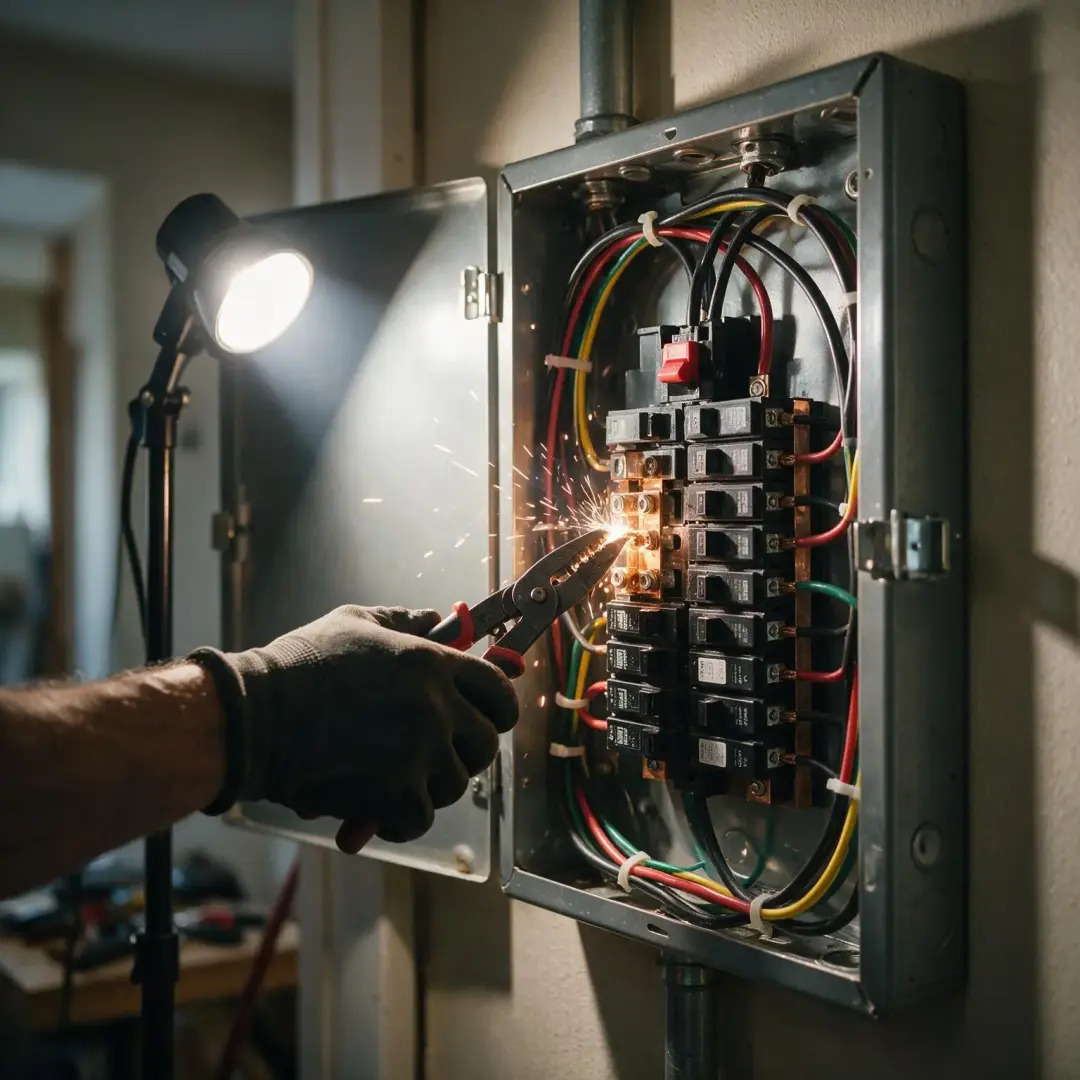
Common warning signs include smoke, sparks, burning smells, hot sockets, exposed wires, repeated power loss and unusual sounds from electrical fittings.
Some problems may appear small at first. However, heat, crackling noises and repeated tripping can show that a dangerous fault is developing behind a wall, inside an appliance or within the consumer unit.
How Common Are Electrical Emergencies in UK Homes?
Fire and rescue services attended 26,180 dwelling fires in England during the year ending March 2026. Of these, 23,795 were accidental dwelling fires.
There were also 184 fire-related deaths in dwelling fires and 4,898 non-fatal casualties in dwellings during the same period.
The number of dwelling fires was 2.8% higher than during the previous year. However, it remained 17% lower than ten years earlier.
- 170,597 fires were attended in England
- 26,180 of these were dwelling fires
- 23,795 dwelling fires were accidental
- 184 fire-related deaths occurred in dwellings
- 4,898 non-fatal casualties occurred in dwellings
The figures cover all types of dwelling fires rather than electrical incidents alone. However, they show why electrical warning signs, damaged appliances and overloaded sockets should never be ignored.
What Should You Do During an Electrical Fire?
An electrical fire may begin inside an appliance, plug, socket, cable or consumer unit. Warning signs can include smoke, flames, sparks, a burning smell or loud crackling noises.
Warn everyone in the property and leave immediately if there are flames, heavy smoke or any doubt about whether it is safe to stay inside. Close doors behind you where possible and contact the emergency services from a safe location.
Never use water on an electrical fire. Water can conduct electricity and may cause a serious or fatal electric shock.
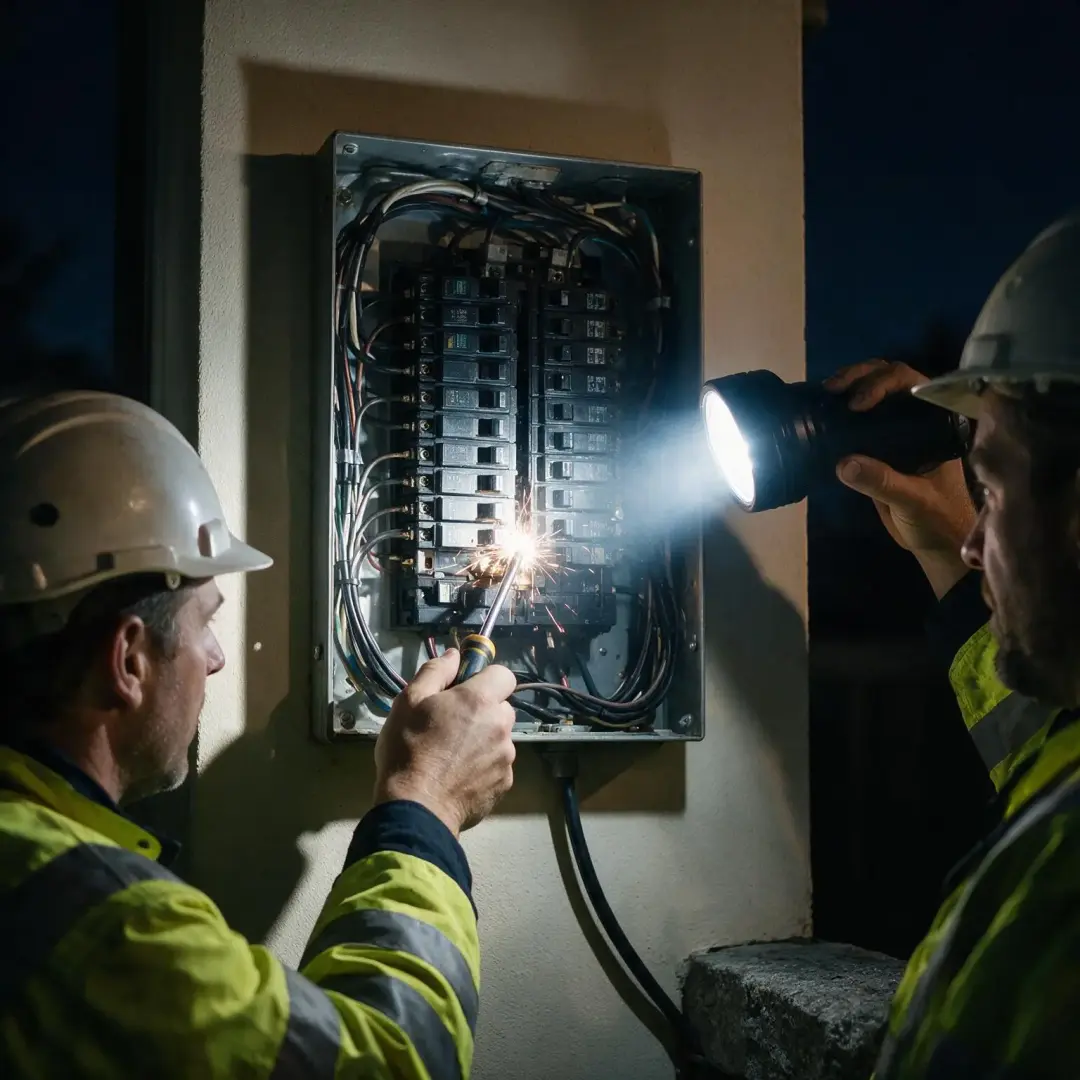
What Should You Do if Someone Receives an Electric Shock?
An electric shock can cause burns, muscle damage, breathing problems, heart problems and internal injuries.
Do Not Touch the Person
Do not touch anyone who may still be in contact with electricity. The electrical current could pass through their body and into yours.
Disconnect the Power
Switch off the electricity at the main switch if you can reach it safely. Do not approach the person until you are certain that the electrical supply has been disconnected.
Get Medical Help
Contact the emergency services if the person is unconscious, has breathing problems, has serious burns or has received a strong shock. Medical advice should also be sought after a less severe shock because some injuries may not be immediately visible.
When responding to an electric shock:
- Do not touch the person while the supply may still be live
- Switch off the electricity when it is safe to do so
- Keep other people away from the area
- Contact the emergency services for a serious shock
- Follow the instructions given by the call handler
What Does a Burning Smell from a Socket Mean?
A smell of hot plastic or burning near a socket can be caused by a loose connection, overloaded circuit, damaged plug or faulty appliance.
Stop Using the Socket
Do not connect any more equipment to the socket. Unplug connected items only when there are no sparks, flames, exposed wires or melted parts.
Turn Off the Circuit
Switch off the affected circuit if you know which switch controls it and can reach the consumer unit safely. Do not use the socket again until it has been checked by an electrician.
Sparking Sockets
A small, brief spark may sometimes appear when a plug is inserted or removed while an appliance is switched on. However, large, repeated or noisy sparks are not normal.
Hot Plugs and Sockets
A plug or socket that feels unusually hot may be overloaded or have a loose electrical connection. Stop using it and arrange an inspection.
Buzzing or Crackling
Buzzing and crackling can be signs of a loose connection or electrical arcing. The power should be isolated and the fitting inspected promptly.
Why Does the Consumer Unit Keep Tripping?
The switches in a consumer unit are designed to disconnect the electricity when certain faults are detected. A switch that trips may therefore be protecting people and the property from danger.
Common causes include a faulty appliance, damaged cable, overloaded circuit, water entry or a fault within the fixed wiring.
You may reset the switch once if there is no smoke, burning smell, unusual heat, water or visible damage. Unplug recently used appliances before attempting a reset.
Do not continue resetting a switch that trips again. Leave the affected circuit switched off and contact an electrician.
What Should You Do if Water Reaches Electrical Fittings?
Leaks, flooding and overflowing baths can allow water to reach sockets, lights, cables, appliances or the consumer unit.
Do not enter standing water if electrical equipment or cables may be live. Keep everyone away from the affected area.
Switch off the electricity at the main switch only if it is safe to reach and the consumer unit is dry. Contact the emergency services if water is close to live equipment and the electricity cannot be isolated safely.
Do not restore the power until the installation has been inspected and confirmed safe.
Are Overloaded Sockets Dangerous?
An overloaded socket or extension lead can become hot and start a fire. The risk increases when several powerful appliances are connected to one outlet.
- Avoid connecting extension leads together: Connecting one extension lead to another increases the risk of overloading.
- Limit powerful appliances: Kettles, heaters, tumble dryers and washing machines can use large amounts of electricity.
- Check for heat: Stop using plugs, adaptors and extension leads that feel unusually hot.
- Unwind cable reels: A coiled cable can trap heat when it carries a heavy electrical load.
- Check the maximum load: Follow the power limit shown on the extension lead or adaptor.
What Should You Do About Damaged Electrical Cables?
Frayed insulation, exposed wires, crushed cables and damaged plugs can leave live electrical parts accessible.
Stop using the item and disconnect it only when it is safe to do so. Do not cover damaged insulation with ordinary tape and continue using the cable. This does not provide a safe permanent repair.
Damaged extension leads and charging cables should normally be replaced. Fixed wiring should be inspected and repaired by an electrician.
Keep damaged equipment away from children and other people until it can be repaired or disposed of safely.
What Causes Flickering Lights?
A loose bulb can cause one light to flicker. However, repeated flickering across several rooms may be caused by a loose electrical connection, overloaded circuit or problem with the incoming supply.
Switch off a light if it flickers, smells hot or makes a buzzing sound. Allow the bulb to cool before checking whether it is fitted correctly.
Contact an electrician if the fault returns, affects several lights or happens when powerful appliances are used. Contact the electricity network operator if nearby properties are also affected.
What Should You Do About Fallen Power Cables?
Fallen or low-hanging electrical cables should always be treated as live. Keep well away and prevent other people and animals from approaching the area.
Do not touch the cable, anything resting against it or any nearby metal object. Electricity may travel through wet ground, fences, vehicles or tree branches.
Contact the emergency services and the electricity network operator from a safe location. Do not return to the area until the cable has been made safe.
When Is a Faulty Appliance an Emergency?
An appliance should be disconnected and checked when it produces smoke, sparks, unusual heat, a burning smell or strange noises.
You should also stop using an appliance if it repeatedly blows a fuse or causes the consumer unit to trip. Do not continue using it simply because it still appears to work.
A fault could be damaging internal parts or making the outer casing live. Contact the manufacturer, retailer or a qualified appliance repair professional.
Check whether the product has been recalled. Do not attempt to open or repair an appliance unless you have the necessary training.
Why Are Smoke Alarms Important?
A working smoke alarm can provide an early warning and give people more time to leave the property.
Smoke alarms should be installed in suitable locations throughout the home. There should be at least one alarm on every floor, with additional alarms considered near higher-risk areas.
Alarms should be tested regularly and replaced when they reach the end of their stated working life. A smoke alarm that is missing, damaged or has a flat battery cannot provide reliable protection.
Smoke alarms do not prevent electrical fires, but they can warn you before smoke and heat spread through the home.
How Often Should Home Electrics Be Inspected?
Homeowners are generally advised to have the electrical installation checked at least every ten years. Landlords in England must arrange an electrical inspection at least every five years, with a report provided by a qualified person.
An earlier inspection may be needed when a property is old, has been altered, has suffered flooding or shows signs of electrical damage.
Warning signs include old wiring, damaged sockets, repeated tripping, burning smells, flickering lights and a lack of modern safety protection.
An inspection can identify faults before they lead to loss of power, electric shock or fire.
How Can You Reduce the Risk of an Electrical Emergency?
Many electrical emergencies can be prevented through regular checks and safe use of household equipment.
Check cables, plugs and sockets for damage. Avoid overloading extension leads and keep electrical equipment away from water.
Charge phones, tablets and other battery-powered products on a hard, clear surface rather than on a bed or sofa. Use a suitable charger that is designed for the product.
Do not ignore unusual heat, buzzing sounds, burning smells, sparks or repeated loss of power. Arrange an electrical inspection when these warning signs appear.
Never carry out electrical work simply because a fault looks easy to repair. Poor repairs can create hidden risks inside walls, sockets and appliances.
When Should You Call an Emergency Electrician?
Contact an emergency electrician when there is an urgent safety problem that does not require the fire and rescue service.
Professional help may be needed when a consumer unit is hot or damaged, a socket is smoking or sparking, the electricity keeps tripping, water has entered the electrical system or fixed wiring has been damaged.
You should also arrange urgent assistance when there is a burning smell behind a wall, several lights flicker without a clear cause or part of the property has lost power.
Contact the emergency services instead when there is a fire, heavy smoke, serious electric shock or immediate danger to life.
Frequently Asked Questions
Can I Reset a Tripped Switch Myself?
You may reset it once when there is no smoke, heat, burning smell, water or visible damage. Stop if it trips again and arrange an electrical inspection.
Should I Unplug a Smoking Appliance?
Do not approach it when there are flames, heavy smoke, sparks or melted parts. Leave the property and contact the emergency services.
Can I Use a Socket After It Has Sparked?
Do not use it if the spark was large, repeated or linked to heat, noise, damage or a burning smell. Have the socket inspected.
Is a Buzzing Socket Dangerous?
Yes. Buzzing or crackling may be caused by a loose connection or electrical arcing. Stop using the socket and arrange urgent help.
What Are the Most Common Electrical Emergencies in the Home?
Common electrical emergencies include electric shocks, electrical fires, sparking sockets, burning smells, damaged cables, overloaded extension leads, water reaching electrical fittings and consumer unit switches that repeatedly trip.
Move people away from the danger and switch off the electricity only when it is safe. Leave the property and contact the emergency services when there is fire, heavy smoke, a serious electric shock or immediate danger to life.
Do not attempt temporary repairs or repeatedly restore the electricity without finding the cause. A qualified electrician can isolate the fault, test the installation and complete the repairs needed to make the property safe.
Do you need help with an electrical emergency in Wigan, Manchester, Liverpool or Bolton? Wigan Electrical Solutions provides professional electrical inspections, fault finding and repairs for domestic and commercial properties. Contact our team to arrange assistance from a qualified electrician.