Installing electric vehicle chargers can help a business serve customers, support employees and prepare for the continued growth of electric transport.
Chargers can turn parking spaces into useful facilities, encourage visitors to stay longer and make it easier for organisations to operate electric vehicles. With more than two million licensed zero emission vehicles now on roads across the United Kingdom, workplace and customer charging is becoming an important part of business planning.
Why Are More Businesses Installing EV Chargers?
The number of electric vehicles on the road has grown quickly. At the end of March 2026, there were 2,148,000 licensed zero emission vehicles in the United Kingdom. This was an increase of 29.6% compared with March 2025.
During the first three months of 2026, 150,000 zero emission vehicles were registered for the first time. In 2025 as a whole, 473,000 new zero emission cars were registered, accounting for 23% of all new car registrations.
These figures suggest that a growing number of employees, customers, visitors and business vehicle drivers may need access to reliable charging.
- More than 2.1 million zero emission vehicles were licensed by the end of March 2026
- New zero emission vehicle registrations rose by 12.9% in the first quarter of 2026
- Zero emission cars represented 23% of new car registrations during 2025
- Zero emission light goods vehicles represented 9% of new registrations in their vehicle group during 2025
- 69,439 workplace charging sockets had received government funding by 1 April 2026
Installing chargers does not only benefit electric vehicle drivers. A well-planned charging system may improve the customer experience, strengthen staff benefits, support business vehicles and create an additional source of income.
EV Chargers Can Attract More Customers
Customers who drive electric vehicles may favour businesses where they can charge while they shop, eat, exercise, attend an appointment or stay overnight.
A charger can therefore make a site more useful and convenient. This may be especially valuable for hotels, restaurants, shopping centres, supermarkets, visitor attractions and leisure facilities.
Drivers may search charging maps before choosing where to stop. When a business makes its chargers available to the public, its location may appear in charging applications and vehicle navigation systems. This can introduce the business to people who may not otherwise have visited.
Availability, price, access times and charging speed should be clearly displayed so drivers know what to expect before arriving.
Customers May Spend Longer at the Business
Electric vehicles normally remain connected for a period of time. The length of the charging session will depend on the charger, the vehicle and the amount of energy needed.
At a destination charger, a customer may stay for one or more hours. During that time, they may visit a shop, order food, use a leisure facility or make another purchase.
This can make charging particularly useful for businesses where longer visits are valuable. A hotel guest may charge overnight, while a restaurant customer may add enough energy during a meal to continue their journey.
The charger should match the average visit. A 7-kilowatt or 22-kilowatt unit may suit a long stay, while a rapid charger may be more appropriate at a short-stop location.
Which Businesses Can Benefit from Customer Charging?
Customer charging can be useful wherever people park while using a service. This includes shops, offices, hotels, restaurants, cafés, gyms, cinemas, healthcare sites and tourist locations.
It may also benefit businesses close to main roads, where drivers need a convenient place to stop during a longer journey.
Before installing public chargers, the business should consider expected demand, opening hours, parking controls, accessibility and the amount of time visitors normally spend at the site.
Workplace Charging Can Support Employees
Employees who cannot charge at home may depend on public or workplace charging. This is common for people who live in flats, rent their home or park on the street.
Providing charging at work gives employees an opportunity to add energy while their vehicle would already be parked. It may reduce the need to make a separate trip to a public charger before or after work.
Workplace charging can be offered as a staff benefit. The business may provide free charging, charge employees for the electricity used or offer a reduced rate.
A managed system can identify individual users, record their electricity use and control who can access each charger. Clear rules should explain the price, maximum stay and what drivers must do when their vehicle has finished charging.
Can Workplace Chargers Help with Recruitment?
Useful workplace facilities can help a business present itself as a considerate and forward-looking employer. Charging may be attractive to current employees and job applicants who already drive an electric vehicle or plan to change vehicles.
The value of this benefit will depend on employee needs and local charging provision. A business should ask staff about likely demand before deciding how many chargers to install.
It may be sensible to prepare extra parking spaces for future chargers, even when only a small number of units are needed at first.
EV Chargers Can Support Business Vehicles
Businesses that operate electric cars or vans can charge them at their own site instead of depending entirely on public facilities.
On-site charging allows vehicles to receive energy while they are parked between shifts or overnight. This can make daily planning more predictable and help ensure that vehicles are ready when employees need them.
Charging records can show how much electricity each vehicle uses. This information may help the business understand running costs, plan routes and compare the performance of different vehicles.
A company with several vehicles should consider when they return to the site, how much energy they need and whether they must all charge at the same time. A managed charging system can share the available electrical power between several vehicles.
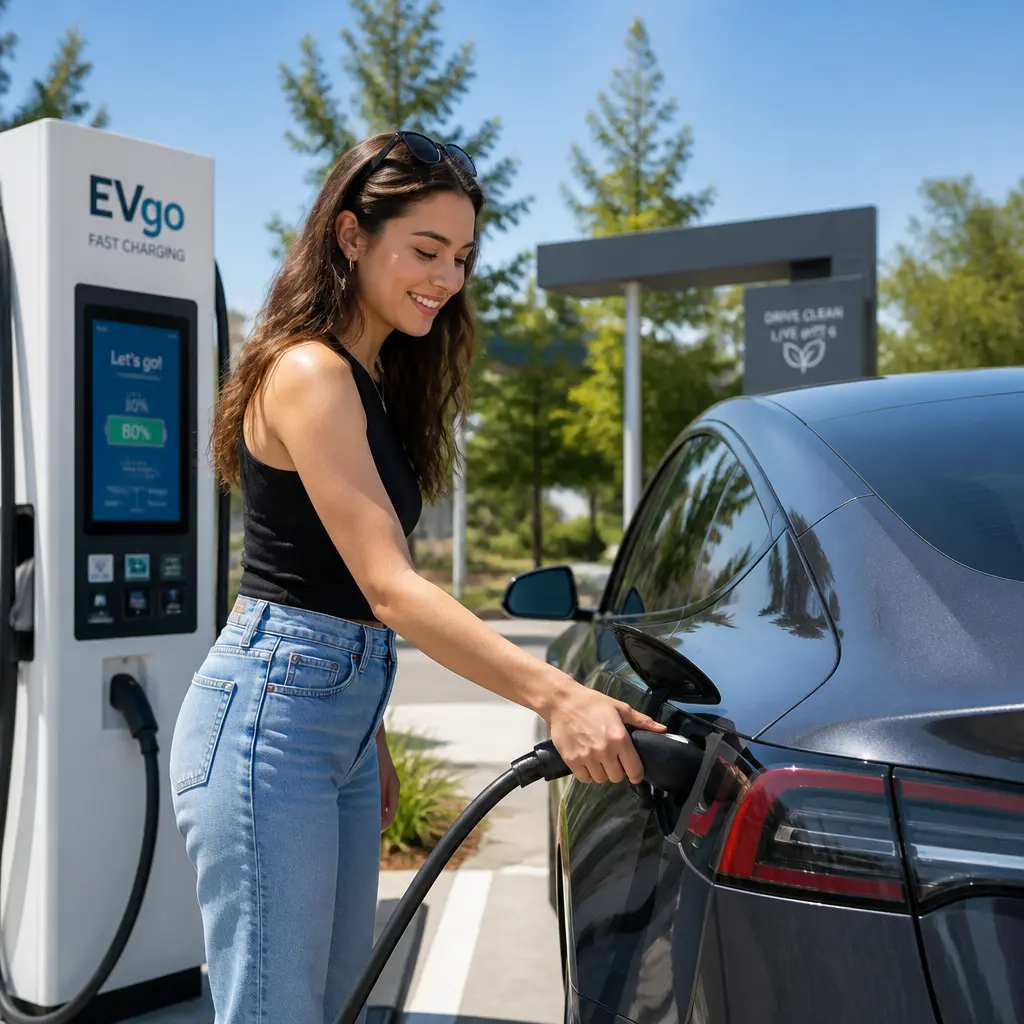
Charging Can Reduce Reliance on Public Facilities
Public chargers are useful during journeys, but their price, availability and condition can vary. Drivers may also have to leave their planned route to find a suitable unit.
A business with its own chargers has greater control over when vehicles charge and who can use the equipment. It can set access times, prices and user groups according to its needs.
On-site charging can also reduce time spent waiting at public locations. This may be important when employees are paid for driving time or when a delay could affect deliveries and customer appointments.
The business will still need suitable plans for vehicles that travel long distances or cannot return to the site between journeys.
Businesses May Earn Income from EV Charging
A business can decide whether to provide free charging or ask drivers to pay. Payment may be based on the electricity used, the amount of time connected or a set fee for each charging session.
Charging fees can help cover electricity, maintenance, payment services and the original installation cost. Some businesses may also treat charging as a separate source of income.
The price should remain clear and reasonable. Drivers should be told about parking charges, connection fees and any extra cost for remaining connected after charging has finished.
Free charging may still provide a commercial benefit when it encourages customers to visit or spend more. The right approach will depend on electricity costs, local competition and the type of customer using the site.
EV Charging Can Strengthen Environmental Plans
Installing chargers can form part of a wider plan to reduce the environmental effect of business travel. Chargers may support employees who choose electric vehicles and help the organisation move its own cars or vans away from petrol and diesel.
A business should avoid making broad environmental claims that it cannot support. Installing chargers does not remove every environmental effect linked to transport, electricity use or vehicle production.
However, the equipment can provide practical support for vehicles that produce no exhaust emissions while being driven. This may improve local air quality around busy sites, particularly when electric vehicles replace petrol or diesel vehicles making frequent short journeys.
The business can record charger use and electricity consumption to provide evidence of how the equipment is being used.
EV Chargers Can Improve a Business Property
Charging facilities can make a commercial property more suitable for changing transport needs. Tenants and visitors may increasingly expect access to charging as electric vehicle ownership grows.
For landlords, installing suitable infrastructure can help prepare parking areas for future demand. The work may include electrical cables, protective equipment and capacity for chargers to be added later.
Preparing several spaces during one project can be more practical than carrying out separate electrical work every time another charger is required.
The effect on a property’s value will depend on the location, local demand and quality of the installation. Chargers should be treated as one part of the property’s facilities rather than a guaranteed increase in value.
Government Support Can Reduce Installation Costs
The Workplace Charging Scheme provides support towards the cost of buying and installing chargers at eligible workplaces in England, Wales, Scotland and Northern Ireland.
For qualifying installations completed from 1 April 2026, eligible organisations can receive up to £500 for each charging socket. Support is available for up to 40 sockets across the organisation’s sites.
The scheme has been extended until 31 March 2027. Applicants must meet the current rules, and the installation must be completed by an authorised installer.
By 1 April 2026, the scheme had supported 69,439 workplace charging socket installations since it began in late 2016. Businesses should check the latest eligibility and application rules before committing to a project.
How Much Does Business EV Charging Cost?
The cost of a commercial charging project depends on the number and power of the chargers, the condition of the existing electrical system and the distance between the electricity supply and parking spaces.
Groundwork, protective barriers, signs, payment systems and internet connections can add to the total. A site may also need an upgraded electricity supply when the existing connection cannot provide enough power.
Businesses should consider both the installation cost and the ongoing cost of electricity, maintenance, software and payment handling.
The most powerful charger is not always the most cost-effective choice. Lower-powered units may be suitable when vehicles remain parked for several hours, while rapid chargers are more useful where drivers need to leave quickly.
Choosing the Right Charger for a Business
A suitable charging system should match the way the parking area is used. A workplace where employees park all day may only need 7-kilowatt chargers. A hotel may use similar units for overnight guests.
A busy roadside business may need rapid chargers because drivers want to continue their journey after a short stop. These units cost more and normally need a stronger electrical connection.
The business should estimate the number of likely users, average parking time and amount of energy each vehicle will need.
It should also consider whether chargers will be reserved for staff, business vehicles, customers or the general public. Different groups may need separate access rules and payment arrangements.
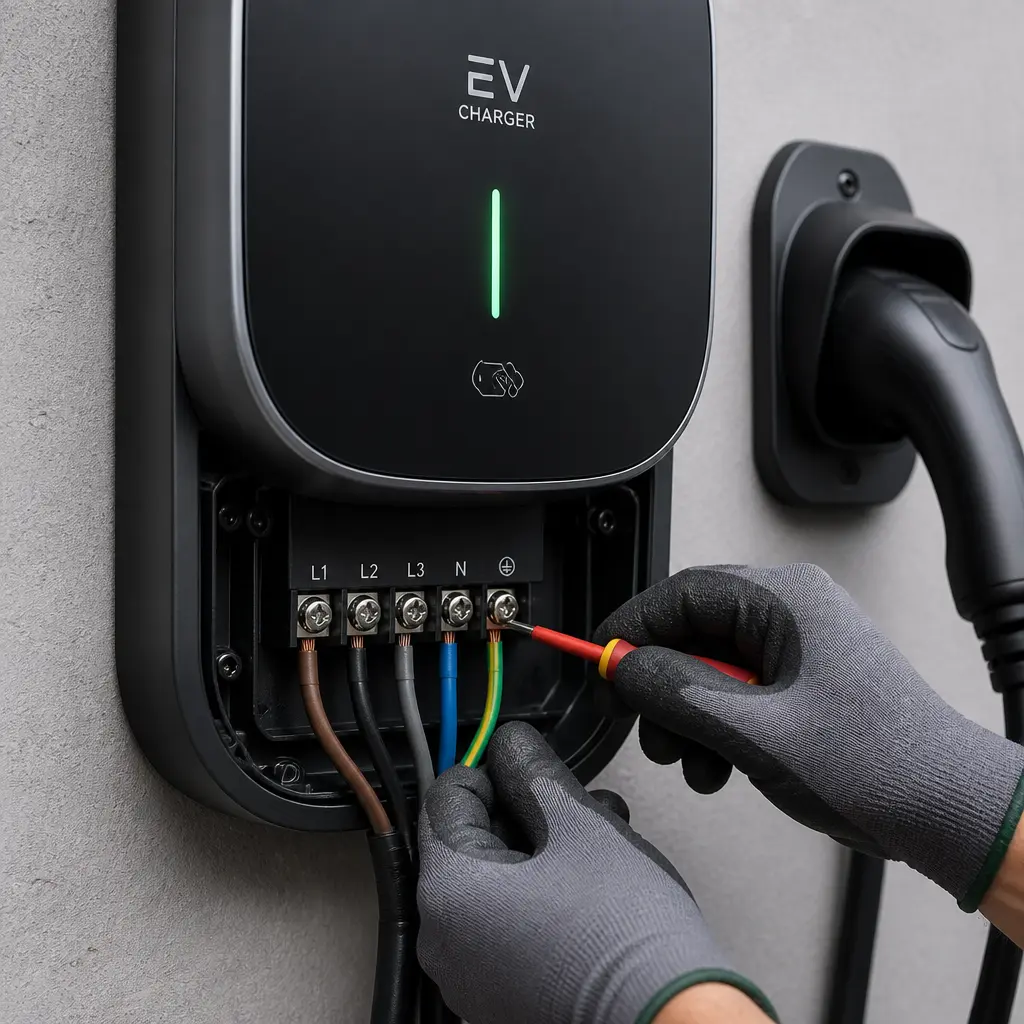
Common options for businesses include:
- 7-kilowatt chargers: Suitable for employees, hotel guests and vehicles parked for several hours
- 11-kilowatt chargers: Useful where compatible vehicles need more energy during a working day
- 22-kilowatt chargers: Suitable for shorter stays when vehicles can accept the full charging rate
- Rapid chargers: Designed for busy sites where drivers need to add range during a short visit
- Managed charging systems: Share available electricity and control access across several parking spaces
Actual charging speed will be limited by the vehicle as well as the charger. Installing a 22-kilowatt unit will not provide that full rate when the connected vehicle can only accept 7 or 11 kilowatts.
What Is Managed EV Charging?
Managed charging controls how much electricity is supplied to each connected vehicle. It can reduce the charging rate at busy times or share the available power between several chargers.
For example, a site may have enough spare electrical capacity to supply two chargers at full power. A managed system could divide that power between more vehicles when several are connected at once.
This can reduce the need for an expensive upgrade to the electricity supply. It can also allow the business to give priority to vehicles that must leave first.
Some systems can schedule charging when electricity costs are lower or when on-site solar panels are producing power. The available functions will depend on the charger and its control system.
Should Businesses Provide Free or Paid Charging?
Free charging is simple for drivers and can be offered as a customer or employee benefit. However, the business will pay for the electricity and may have less control over how long vehicles remain connected.
Paid charging can recover some or all of the operating cost. It may also discourage drivers from occupying a charging space when they do not need energy.
A mixed approach is possible. Employees could receive a reduced rate, customers could receive a free charging period and members of the public could pay the full price.
Whatever system is chosen, prices and access rules should be easy to understand before a driver connects their vehicle.
What Should a Business Check Before Installation?
A professional site assessment should examine the electrical supply, parking arrangement, cable routes and expected charging demand.
The installer should check whether the property has enough spare capacity and whether load management could prevent or delay an electrical upgrade.
The business should also consider lighting, signs, protective barriers and safe routes for pedestrians. Charging cables should not create a trip risk or block entrances and walkways.
Accessible charging spaces should be included where appropriate. Controls, screens and connections should be positioned so that they can be reached and used by as many drivers as possible.
Permission may be needed from the property owner, landlord, electricity network operator or local planning authority before work begins.
How Many Chargers Does a Business Need?
The number of chargers should be based on expected use rather than the total number of parking spaces. Staff surveys, vehicle records and customer data can help estimate demand.
A small business may begin with one or two chargers and prepare nearby spaces so more units can be added later. A larger workplace may need a managed network serving many vehicles.
Businesses should consider how quickly demand could grow. At the end of March 2026, the number of licensed zero emission vehicles was almost 30% higher than it had been one year earlier.
Installing suitable supporting infrastructure during the first project can make future expansion easier and reduce repeated disruption to the car park.
How Should Business EV Chargers Be Maintained?
Chargers should be checked regularly for damaged cables, cracked connections, loose parts and signs of impact. Faults should be reported and repaired promptly.
The parking area should remain clean, well lit and clearly marked. Protective posts may be needed where vehicles could strike the equipment.
Chargers connected to a control or payment system may also need software updates and a reliable internet connection. The business should know who will respond when a unit stops working or a driver has difficulty starting a session.
Maintenance arrangements should be agreed before installation. This may include remote monitoring, planned inspections and an emergency contact service.
Electricity use and charger performance should be reviewed to confirm that the system continues to meet demand.
Frequently Asked Questions
```Are EV Chargers Worth Installing for a Small Business?
They can be valuable when employees, customers or business vehicles need charging. A small business should first assess likely use, installation cost and the amount of time vehicles remain parked.
Can a Business Charge Customers to Use an EV Charger?
Yes. A business can normally set a charging price, subject to the rules applying to the equipment, payment system and display of prices. Drivers should be told about all charging and parking costs before connecting.
Can Employees Use Workplace Chargers?
Yes. Chargers can be reserved for employees or shared with customers and business vehicles. Access cards, mobile applications or user accounts can control who uses them.
Does a Business Need Rapid Chargers?
Not always. Lower-powered chargers are often more suitable and less costly when vehicles remain parked for several hours. Rapid charging is most useful at short-stay and high-traffic locations.
Can Chargers Be Added Later?
Yes. Planning cable routes, electrical capacity and supporting infrastructure during the first installation can make later expansion easier.
How Do EV Chargers Benefit Businesses?
EV chargers can help businesses attract customers, support employees and operate electric cars or vans more easily. They may encourage visitors to stay longer, provide a source of income and reduce reliance on public charging.
Charging facilities can also support environmental plans and prepare commercial properties for the growing number of electric vehicles on the road.
The results will depend on choosing equipment that matches the site. Businesses should consider who will use the chargers, how long vehicles will remain parked and how much electrical power is available.
A professional assessment can identify a suitable charger type, installation plan and management system. It can also help the business prepare for future demand without paying for charging power that its users do not need.
Are you considering EV chargers for your workplace, customers or business vehicles? Wigan Electrical Solutions can assess your electrical supply, parking area and expected demand before recommending a suitable commercial charging system. Contact the team to arrange a professional assessment and installation for Wigan, Manchester, Liverpool and Bolton.