Electrical faults can develop without warning and may place people, buildings and belongings at risk. Smoke, sparks, burning smells, electric shocks and repeated power cuts should never be ignored.
Knowing when to call an emergency electrician can prevent a minor fault from becoming a fire or serious safety incident. However, the emergency services should always be contacted first when there is a fire, heavy smoke, a serious electric shock or an immediate risk to life.
What Is an Electrical Emergency?
An electrical emergency is a fault that creates an immediate or rapidly developing risk of electric shock, burns, fire or serious property damage.
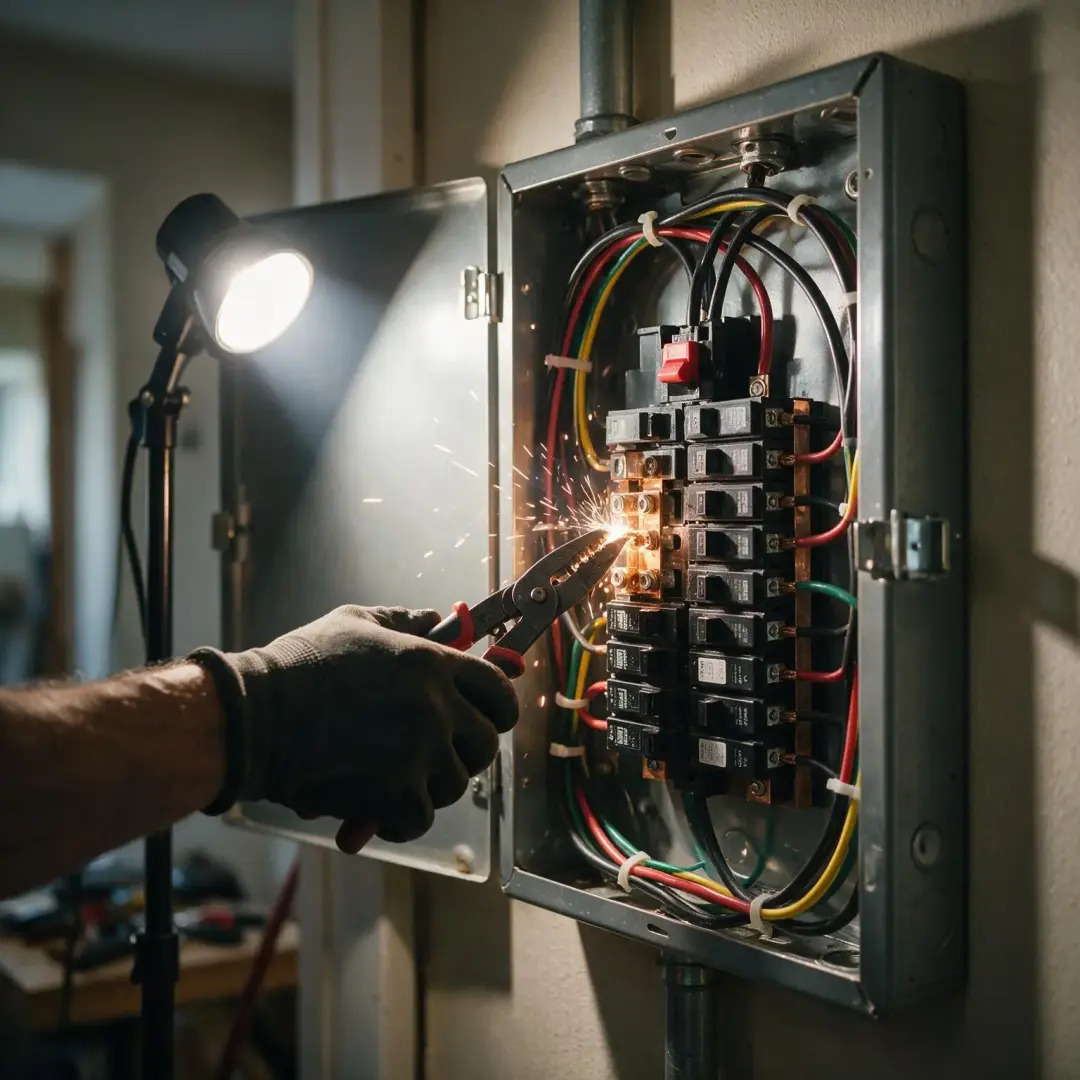
Some faults are clearly dangerous, such as a smoking consumer unit or exposed live wire. Others may seem less serious at first. A warm socket, faint burning smell or switch that repeatedly trips can show that a dangerous problem is developing behind a wall or inside electrical equipment.
You should arrange urgent professional help when a problem cannot be made safe by simply switching off and stopping use of the affected appliance or circuit.
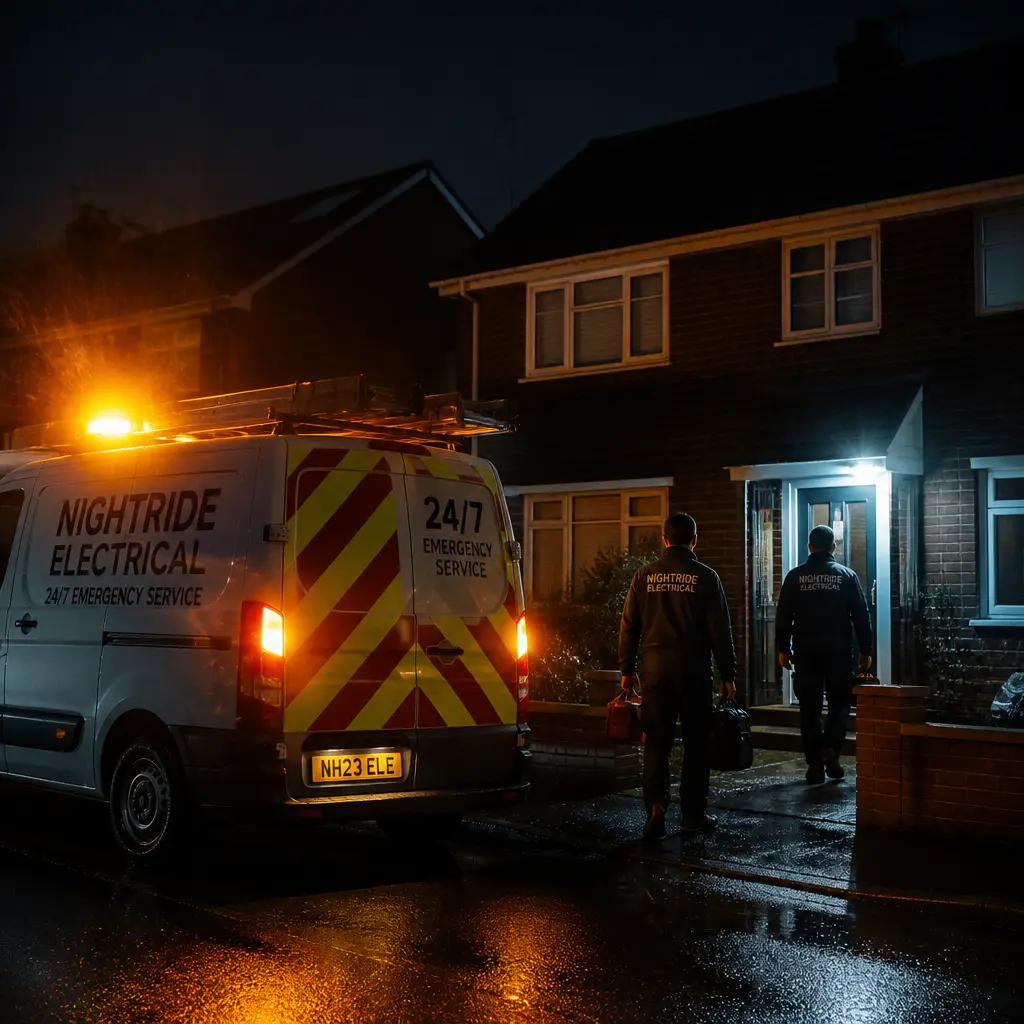
We got a call from Rachel in Manchester after she noticed a strong burning smell coming from a socket and part of the house suddenly lost power. She called us straight away, and when we arrived, we found damaged wiring behind it that was starting to overheat.
We isolated the faulty circuit, replaced the damaged parts and tested the system before restoring the power safely.
Luckily, Rachel called early because the fault was dealt with before it caused more serious damage. This is why we always advise calling an emergency electrician if you notice burning smells, sparks, repeated power cuts or unusually hot sockets and switches.
by JAMIE TUCKER, Wigan Electrical SolutionsHow Common Are Serious Electrical and Fire Risks?
Fire and rescue services attended 25,334 dwelling fires in England during the year ending March 2025. Of these, 22,877 were accidental dwelling fires.
There were 208 fire-related deaths in dwelling fires and 4,676 non-fatal casualties in dwellings during the same period.
Official figures also show that misuse of equipment or appliances caused 29% of accidental dwelling fires. Cooking appliances were the largest named source of ignition, while electrical distribution was the largest specified source in other building fires.
- 142,494 fires were attended in England
- 25,334 of these were dwelling fires
- 22,877 dwelling fires were accidental
- 208 fire-related deaths occurred in dwellings
- 4,676 non-fatal casualties occurred in dwellings
- 29% of accidental dwelling fires were caused by misuse of equipment or appliances
These figures cover a wide range of fires and do not all relate to fixed electrical wiring. However, they show why damaged appliances, overloaded extension leads, burning smells and unusual electrical behaviour must be taken seriously.
The figures were published by the government in July 2025 and cover incidents recorded during the year ending March 2025.
Call Immediately if You See Smoke or Flames
Smoke or flames coming from a socket, appliance, consumer unit or electrical cable are signs of a serious emergency.
Warn everyone in the property and leave immediately when there are flames, spreading smoke or any doubt about whether it is safe to remain inside. Close doors behind you where possible and contact the emergency services from a safe location.
Never pour water onto an electrical fire. Water can carry electrical current and may cause a serious or fatal electric shock.
An emergency electrician may be needed after the fire and rescue service has made the immediate danger safe. The electrician can isolate damaged circuits, inspect the installation and confirm what must be repaired before the electricity is restored.
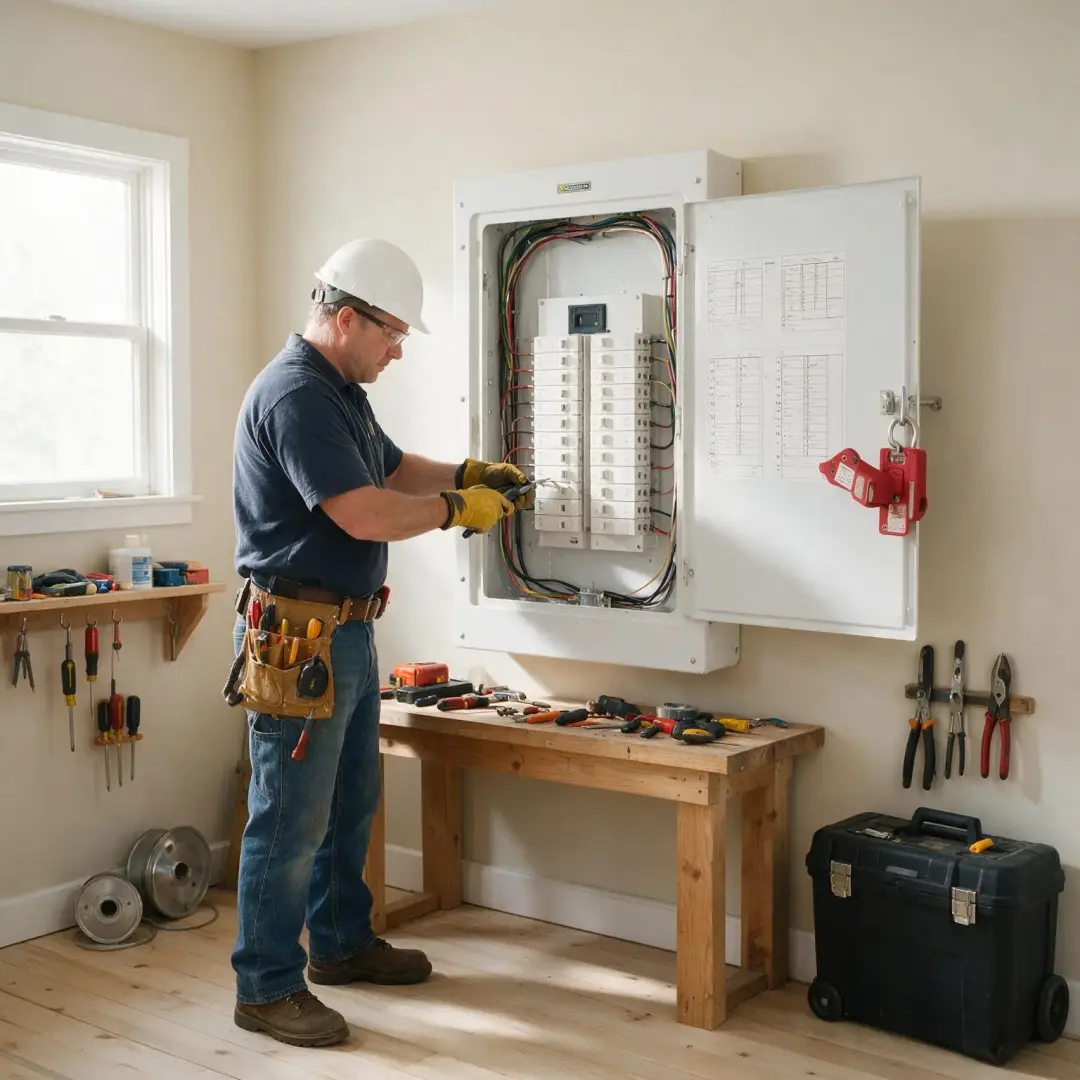
Call After an Electric Shock
An electric shock can cause burns, muscle damage, breathing problems, heart problems and internal injuries. The full effect may not always be visible immediately.
Do Not Touch the Person
Do not touch someone who may still be in contact with a live electrical source. The current could pass through their body and into yours.
Disconnect the Electricity
Switch off the main electrical supply only when you can reach it without entering water, touching damaged equipment or moving close to exposed wiring.
Get Medical Assistance
Contact the emergency services when the person is unconscious, has breathing problems, has serious burns or has received a strong shock. Medical advice should also be sought after a less severe shock because some injuries can develop later.
Once the immediate medical danger has been addressed, arrange an urgent electrical inspection to identify and repair the cause.
Call if a Socket Smells of Burning
A smell of burning plastic near a socket can be caused by a loose connection, damaged plug, overloaded circuit or faulty appliance. Heat may continue building inside the wall even when there are no visible flames.
Stop using the socket immediately. Disconnect equipment only when there are no flames, large sparks, melted parts or exposed wires.
Switch off the affected circuit if you know which switch controls it and can reach the consumer unit safely. Do not use the socket again until it has been inspected.
Call an emergency electrician when the smell is strong, the socket is hot, smoke is present or the source of the smell cannot be found.
Call if a Socket Is Sparking, Buzzing or Hot
Repeated or Large Sparks
A tiny, brief spark may sometimes appear when equipment is connected while switched on. Large, repeated, bright or noisy sparks are not normal and require urgent attention.
Buzzing and Crackling
Buzzing or crackling can be caused by a loose connection or electricity jumping across a damaged connection. This can produce enough heat to start a fire.
Unusual Heat
A plug or socket that feels unusually hot may be overloaded or damaged. Stop using it and keep flammable items away from the area.
Call an emergency electrician when these warning signs continue after equipment has been disconnected or when the socket cannot be isolated safely.
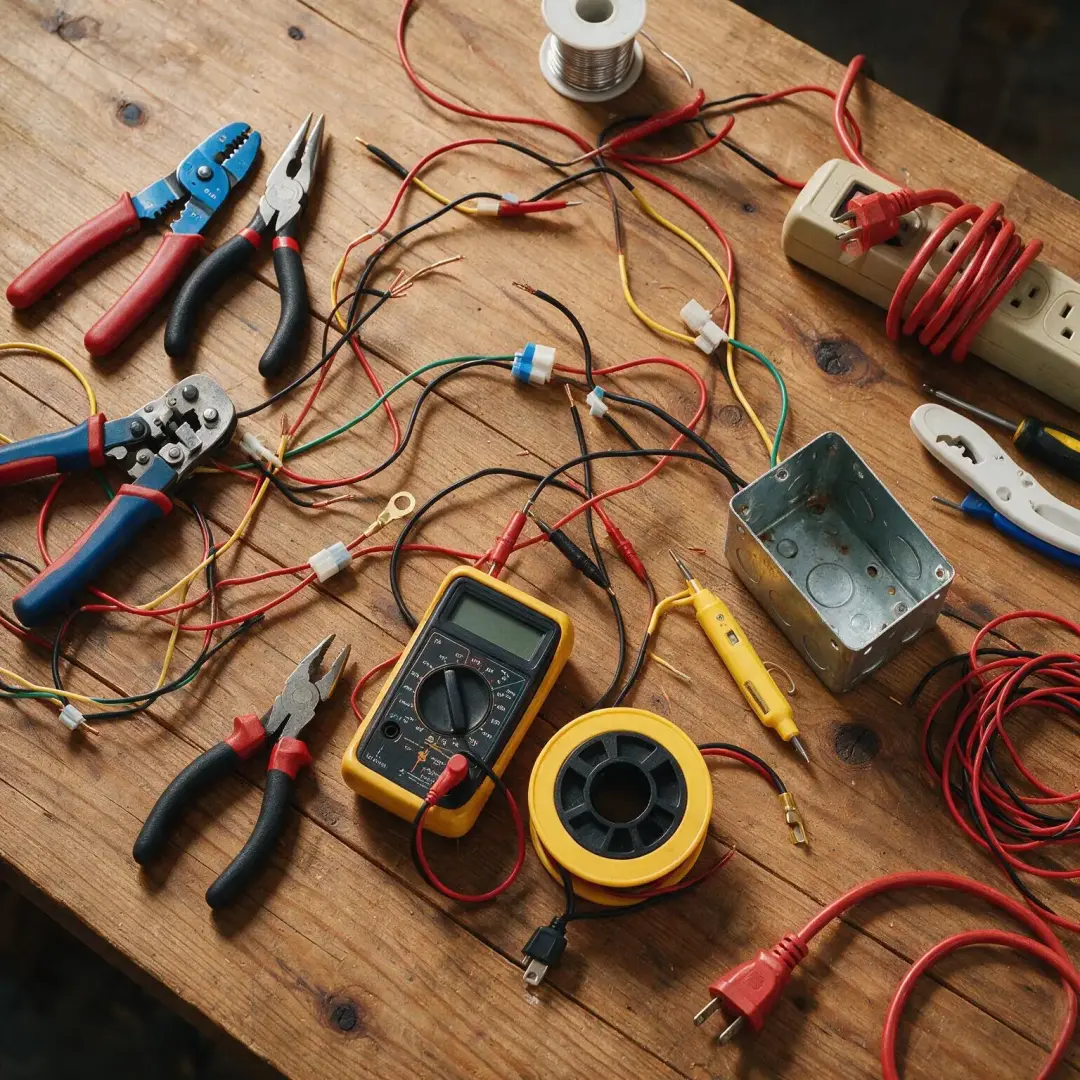
Call if the Consumer Unit Keeps Tripping
The switches in a consumer unit are designed to disconnect the electricity when certain faults are detected. A tripped switch may therefore be protecting people and the property from danger.
Common causes include a faulty appliance, overloaded circuit, damaged cable, water entry or a fault in the fixed wiring.
You may unplug recently used appliances and reset the switch once when there is no smoke, burning smell, unusual heat, water or visible damage.
Do not keep resetting a switch that trips again. Repeatedly restoring the electricity without finding the fault can increase the risk of shock, heat damage or fire.
Leave the affected circuit switched off and call an emergency electrician when:
- The switch trips immediately after being reset
- Several circuits lose power
- The consumer unit feels hot
- You hear buzzing or crackling
- There is a burning smell or visible damage
Call if Water Has Reached Electrical Equipment
Leaks, floods and overflowing baths can allow water to reach sockets, lights, cables, appliances or the consumer unit.
Do not enter standing water when electrical equipment or cables may still be live. Keep everyone away from the affected area.
Switch off the main electrical supply only when the consumer unit is dry and you can reach it without crossing water or touching damaged equipment.
Contact the emergency services when water is close to live equipment and the electricity cannot be isolated safely.
Call an emergency electrician after a leak or flood has affected electrical fittings, even when everything appears to be working. Water can remain inside sockets, cables and equipment, causing corrosion or faults that appear later. Do not restore the electricity until the installation has been inspected and confirmed safe.
Call if Fixed Wiring Is Exposed or Damaged
Exposed wires, damaged wall cables and broken electrical fittings can leave live parts within reach. This may happen during building work, after an impact or when old fittings begin to break apart.
Keep people and pets away from the area. Do not touch the wires, cover them with ordinary tape or attempt a temporary repair.
Switch off the affected circuit when it is safe to do so. Call an emergency electrician when you cannot identify the correct circuit, when the damaged wiring is still live or when the fault affects an important part of the property.
A damaged removable charging cable or extension lead should normally be disconnected and replaced. Damage to fixed wiring must be tested and repaired by a qualified electrician.
Call if You Have a Sudden or Partial Power Cut
A complete power cut may be caused by a wider problem with the local electricity network. Check whether nearby homes or street lights are also affected.
If only your property has lost power, check the consumer unit without touching any damaged, wet or unusually hot parts.
A partial power cut may affect one room, several sockets or one group of lights. It can be caused by a tripped switch, damaged circuit or loose connection.
Call an emergency electrician when part of the property loses power without a clear reason, the consumer unit will not reset or the loss of power is linked to heat, noise, smoke or a burning smell.
Contact the electricity network operator instead when several nearby properties have also lost power.
Call if Several Lights Flicker
A loose bulb may cause one light to flicker. However, lights that repeatedly flicker in several rooms may indicate a loose electrical connection, overloaded circuit or problem with the incoming supply.
Switch off any light that flickers, smells hot or makes a buzzing sound. Allow the bulb to cool before checking whether it is fitted correctly.
Call an emergency electrician when:
- Several lights flicker at the same time
- The problem happens when a powerful appliance is switched on
- Lights become unusually bright or dim
- You notice buzzing, heat or a burning smell
- The fault continues after a bulb has been replaced
Call if an Appliance Creates Smoke, Sparks or Heat
Stop using an appliance when it produces smoke, sparks, unusual heat, a burning smell or strange noises. You should also stop using it if it repeatedly blows a fuse or causes the consumer unit to trip.
Unplug the appliance only when it is safe to approach. Do not touch equipment that is smoking heavily, on fire, partly melted or standing in water.
An appliance fault does not always require an emergency electrician when the item can be disconnected safely and the rest of the electrical system works normally. The manufacturer or a qualified repair professional may be able to help.
Call an emergency electrician when the appliance has damaged a socket, the circuit continues tripping after it is unplugged or there are signs that the fault has affected fixed wiring.
Who Should Deal with Fallen Power Cables?
Fallen or low-hanging power cables should always be treated as live. Keep well away and prevent other people and animals from approaching the area.
Do not touch the cable, anything resting against it or any nearby metal object. Electricity may travel through wet ground, fences, vehicles and tree branches.
This is normally a matter for the emergency services and the electricity network operator rather than a domestic emergency electrician.
Contact them from a safe location and do not return to the affected area until the cable has been made safe. An electrician may later be needed if the incident has damaged the electrical equipment inside your property.
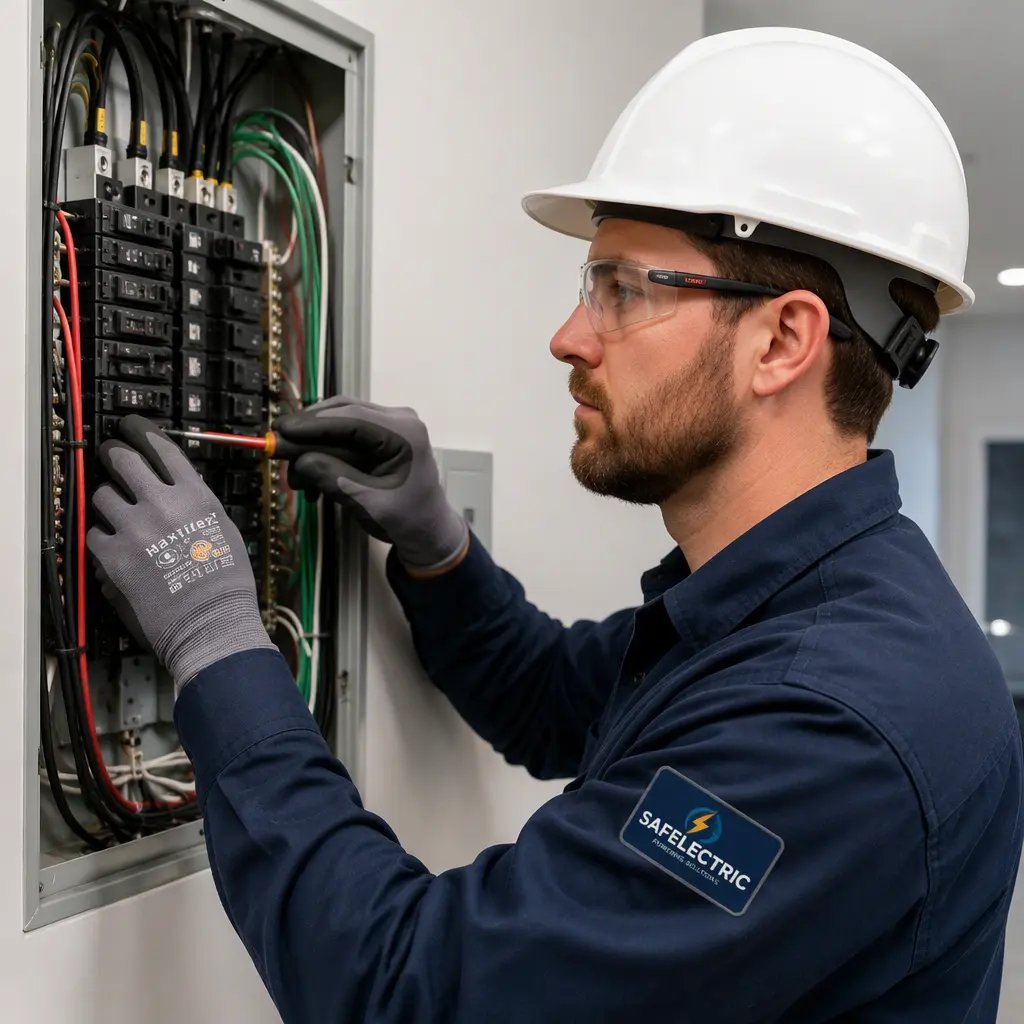
When Should You Contact the Emergency Services Instead?
An emergency electrician can deal with urgent faults, but they are not a replacement for the fire, ambulance or police services.
Leave the property and contact the emergency services when:
- There are visible flames or spreading smoke
- Someone has received a serious electric shock
- A person is unconscious or having trouble breathing
- You cannot leave the property safely
- Water is in contact with live equipment and the supply cannot be isolated
- A fallen power cable is creating an immediate public danger
Do not delay an emergency call while searching for an electrician. Once the immediate danger has been controlled, an electrician can inspect the installation and complete the repairs needed to make it safe.
What Should You Do While Waiting for an Electrician?
Your first priority is to keep everyone away from the danger. Do not dismantle fittings or attempt to test wiring yourself.
- Switch off the affected circuit when it is safe to do so
- Switch off the main supply if several circuits may be affected
- Keep children and pets away from the area
- Do not touch exposed wires or wet electrical equipment
- Do not repeatedly reset tripped switches
- Do not use a damaged socket, appliance or extension lead
- Move flammable items away only when this can be done safely
Tell the electrician what happened, when the problem began and which appliances were in use. Mention any smells, sounds, sparks, heat, water damage or recent building work.
Can an Electrical Problem Wait Until Normal Working Hours?
Some electrical problems do not need an immediate call-out when the affected item or circuit can be safely switched off and left unused.
A routine appointment may be suitable for a single broken light fitting, one damaged appliance that has been unplugged or a socket that is no longer needed and has been safely isolated.
Do not wait when there is:
- Smoke, sparks or a burning smell
- Unusual heat from a socket or consumer unit
- Repeated tripping
- Exposed fixed wiring
- Water near electrical equipment
- A loss of power affecting essential equipment
- Any risk that people may touch a live part
How Can You Reduce the Risk of an Electrical Emergency?
Regular checks and safe use of electrical equipment can prevent many emergencies.
- Check plugs, sockets and cables for cracks, heat or other damage
- Avoid connecting one extension lead to another
- Do not run powerful appliances from the same extension lead
- Fully unwind cable reels before using them with high-powered equipment
- Keep electrical appliances away from baths, sinks and other sources of water
- Charge battery-powered products on a hard, clear surface
- Use chargers designed for the product
- Test smoke alarms regularly
- Arrange an inspection when warning signs appear
Homeowners are generally advised to have the electrical installation inspected at least every ten years. Landlords in England must arrange an electrical safety inspection at least every five years. An earlier inspection may be needed after flooding, major building work or signs of electrical damage.
Frequently Asked Questions
```Can I Reset a Tripped Switch Myself?
You may reset it once when there is no smoke, heat, burning smell, water or visible damage. Unplug recently used appliances first. Stop if it trips again and arrange an inspection.
Is a Buzzing Socket an Emergency?
It may be. Buzzing or crackling can indicate a loose or damaged connection. Stop using the socket, isolate the circuit when safe and arrange urgent help.
Should I Unplug a Smoking Appliance?
Do not approach it when there are flames, heavy smoke, large sparks or melted parts. Leave the property and contact the emergency services.
Can I Use a Socket After It Has Sparked?
Do not use it when the spark was large, repeated or linked to heat, noise, damage or a burning smell. Have the socket inspected before using it again.
Is a Power Cut an Electrical Emergency?
A local network power cut is normally handled by the electricity network operator. Call an emergency electrician when only your property is affected or when the power loss is linked to tripping, heat, smoke, noise or damage.
When Should You Call an Emergency Electrician?
Call an emergency electrician whenever an electrical fault creates an urgent safety risk but does not require an immediate response from the fire, ambulance or police services.
Urgent professional help is usually needed for smoking or sparking sockets, hot consumer units, repeated tripping, exposed fixed wiring, unexplained partial power cuts, water-damaged electrical fittings and burning smells that may be coming from behind a wall.
Do not ignore a fault simply because the electricity still works. Loose connections and damaged cables can continue producing heat until they cause serious damage or start a fire.
Switch off the electricity only when it is safe, keep everyone away from the affected area and avoid temporary repairs. A qualified electrician can isolate the problem, test the installation and complete the work required to make the property safe.
Do you need an emergency electrician near me in Wigan, Manchester, Liverpool or Bolton? Wigan Electrical Solutions provides professional fault finding, electrical inspections and repairs for domestic and commercial properties. Contact the team to arrange assistance from a qualified electrician.